
Why Industrial Wearable Apps Fail Without the Right IoT Backend

- June 30, 2026 |
- By Nirav Luhar - Bluepixel Team

The Real Reason Factory Wearable Pilots Don't Scale
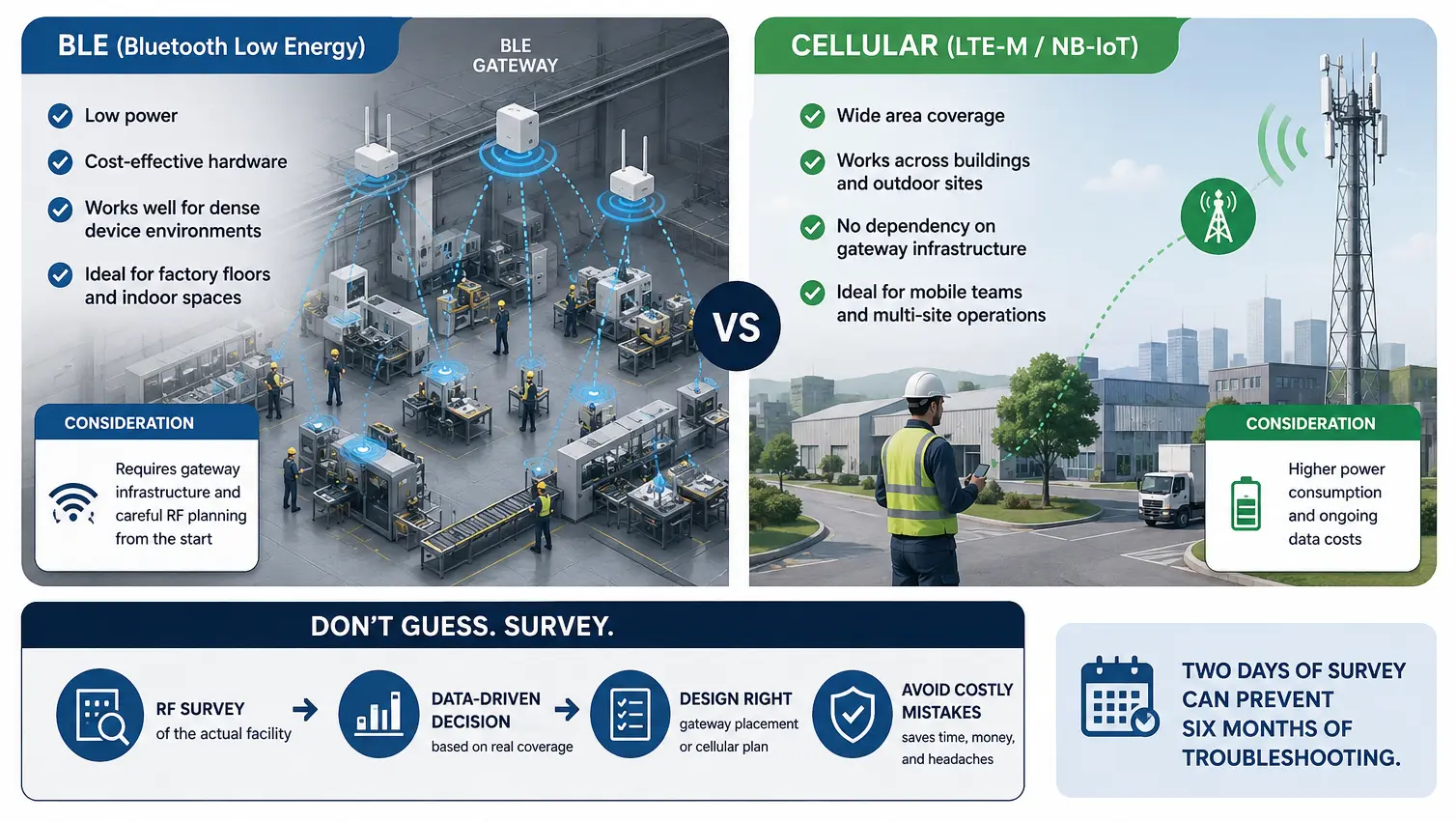
BLE vs Cellular: The Decision You Can't Easily Reverse
- Fits most factory floor wearable deployments
- Low power, adequate range with proper gateway positioning
- Handles dense device environments reasonably well
- Hardware inexpensive enough for every device on a floor
- Requires deliberate gateway layer planning from the start
- Best for: production floors, enclosed facilities
- Makes sense when wearables cross building boundaries
- Covers large outdoor campuses reliably
- No dependency on gateway coverage
- Higher power draw and real data costs
- Unnecessary expense on a 5,000 sq ft production floor
- Best for: field service teams, multi-site deployments
Firmware and App Sync: The Quiet Source of Most Data Problems
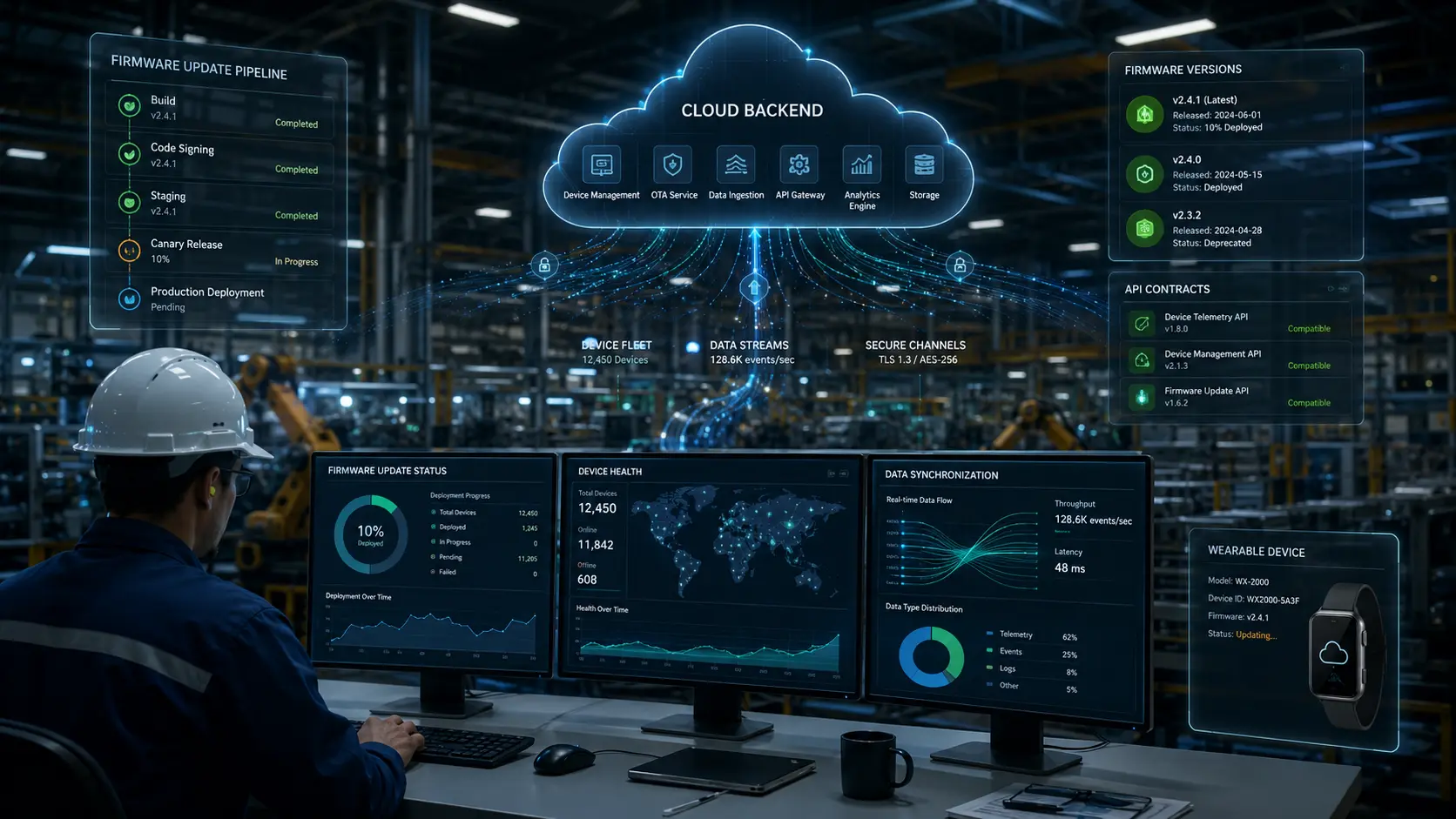
OTA (over the air) update management is non-negotiable for factory deployments. You cannot physically touch 300 devices on an active production floor to push a patch. The backend needs a reliable OTA pipeline with rollback capability, staged rollout controls, and per-device confirmation of update success. Teams that build this as an afterthought discover the consequences the first time a bad firmware build starts corrupting sensor readings across half the fleet and there’s no clean way to recover.
What a Working Wearable Backend Actually Looks Like
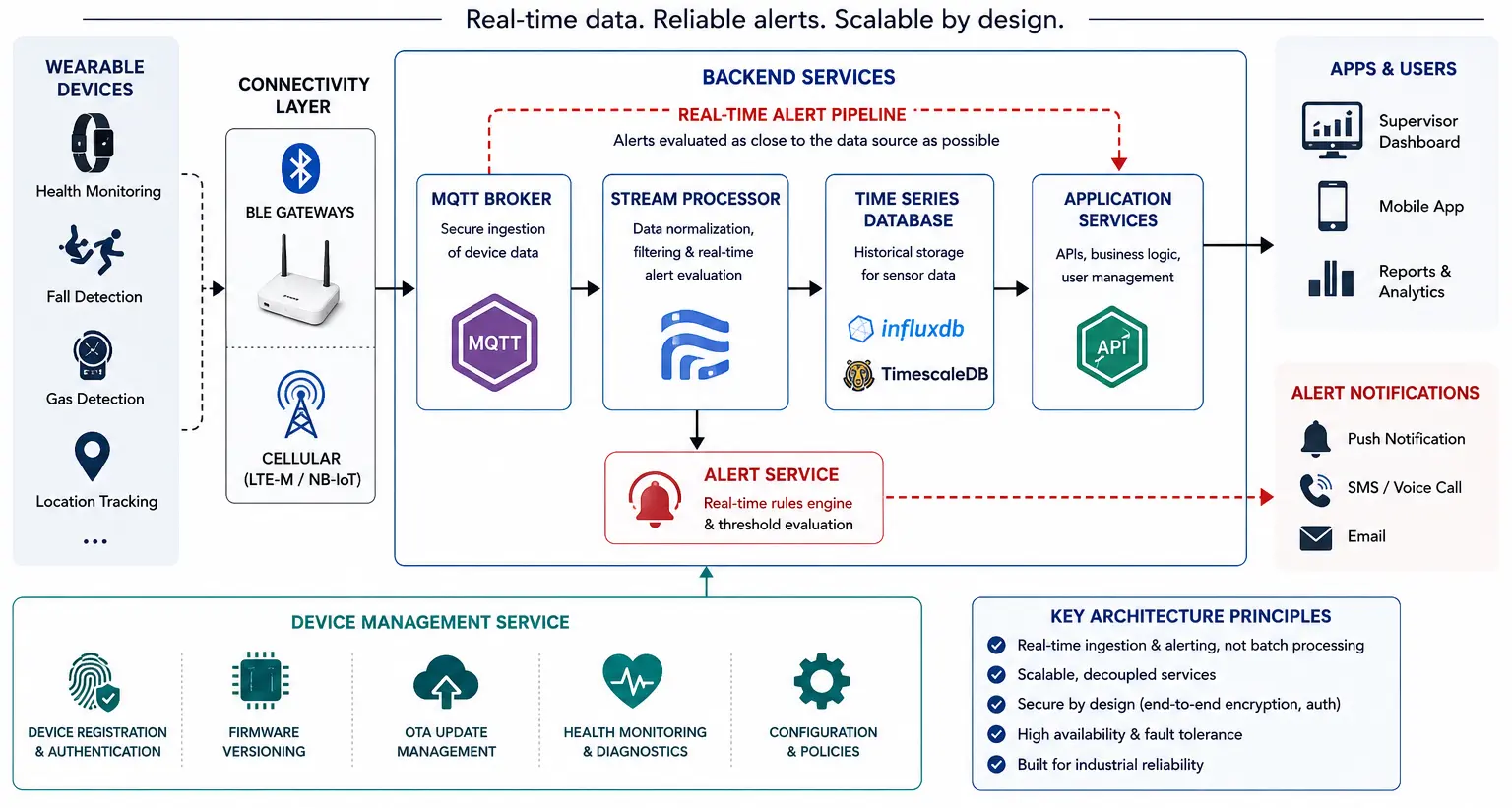
MQTT broker receiving data from BLE gateways or direct cellular connections.
Stream processor handling data normalization and alert rule evaluation in near real time.
Time series database (InfluxDB and TimescaleDB both hold up well here) for historical sensor storage.
Device management service covering firmware versioning, health monitoring.
OTA. On top of that sits whatever app workers or supervisors actually use.
Relevant example:
A hospital network engaged us to build a real-time location system for asset management across three campuses. The requirement was continuous tracking of more than 10,000 tagged assets with sub-meter accuracy. The architecture had to process streaming location data from BLE readers continuously, not in batches and not on a schedule. That same discipline applies directly to industrial wearables: real-time ingestion, device management with proper versioning, and firmware contracts that stay in sync with the API. Three years in, that system runs at 92% uptime. The client cut asset management costs by 40%. The hardware was solid. The backend is what made it reliable at scale.
What's Worth Watching in the Next Few Years
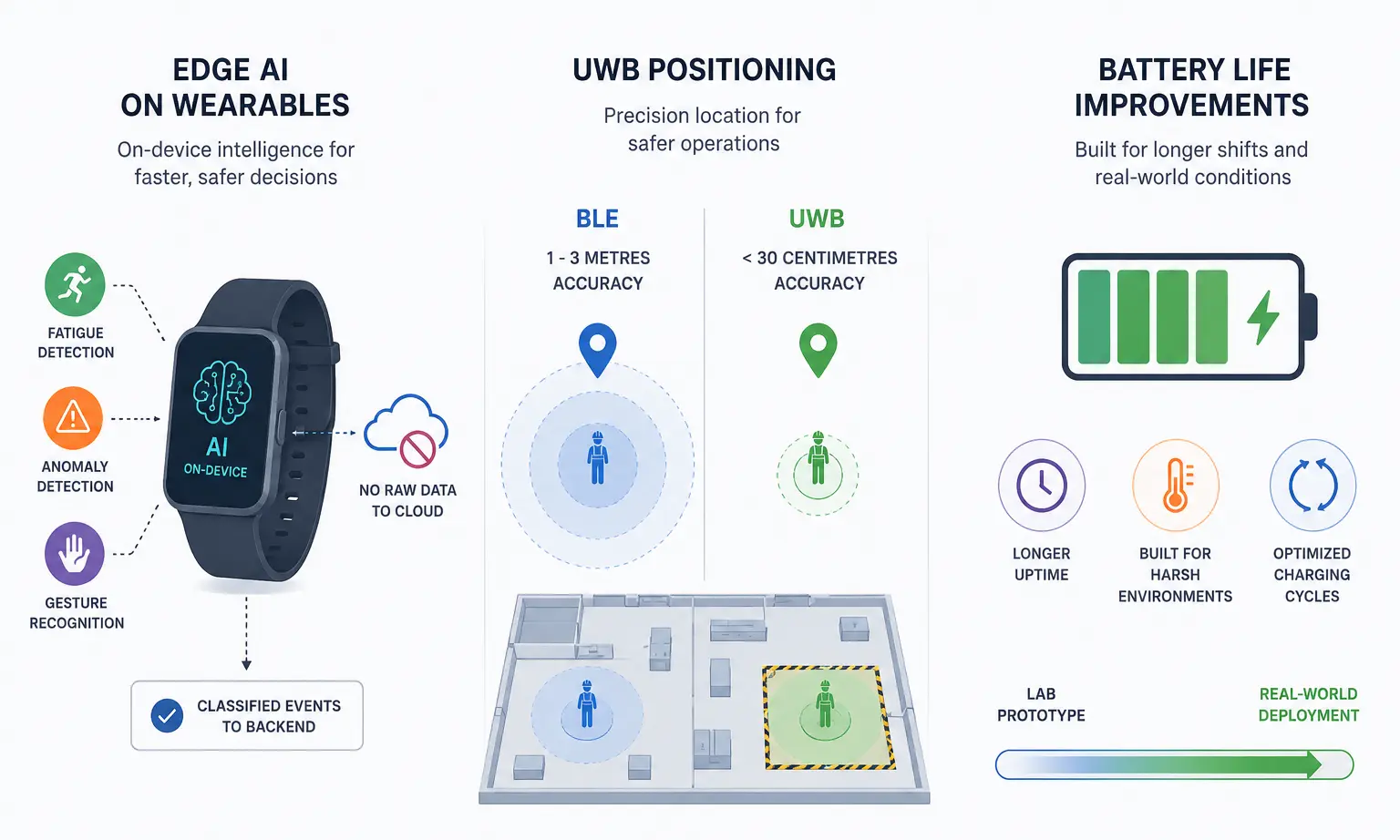
Microcontrollers are now capable enough to run lightweight inference models on-device, so fatigue classification, motion anomaly detection, and gesture recognition can happen without sending raw sensor data to the cloud first. For latency-sensitive safety applications and deployments where connectivity is intermittent, this matters. It also changes the backend’s job; instead of ingesting raw streams, it receives classified events, which simplifies ingestion but adds meaningful complexity to the firmware.
UWB (Ultra Wideband) is starting to appear in industrial wearables for positioning accuracy. BLE-based location gives you 1 to 3 metre accuracy in good conditions. UWB consistently achieves accuracy below 30 centimetres. For applications where knowing precisely where a worker is standing is critical, such as near a restricted zone or at a specific station, the gap is significant.
Battery life improvements are also moving faster than people expect. The distance between “wearable that works in a lab” and “wearable someone will wear through a 10-hour shift in a hot facility” is narrowing. This is largely a hardware story, but it does change what backend architects can realistically assume about device uptime and charging cycle patterns.
Getting the Architecture Right Before It Gets Expensive
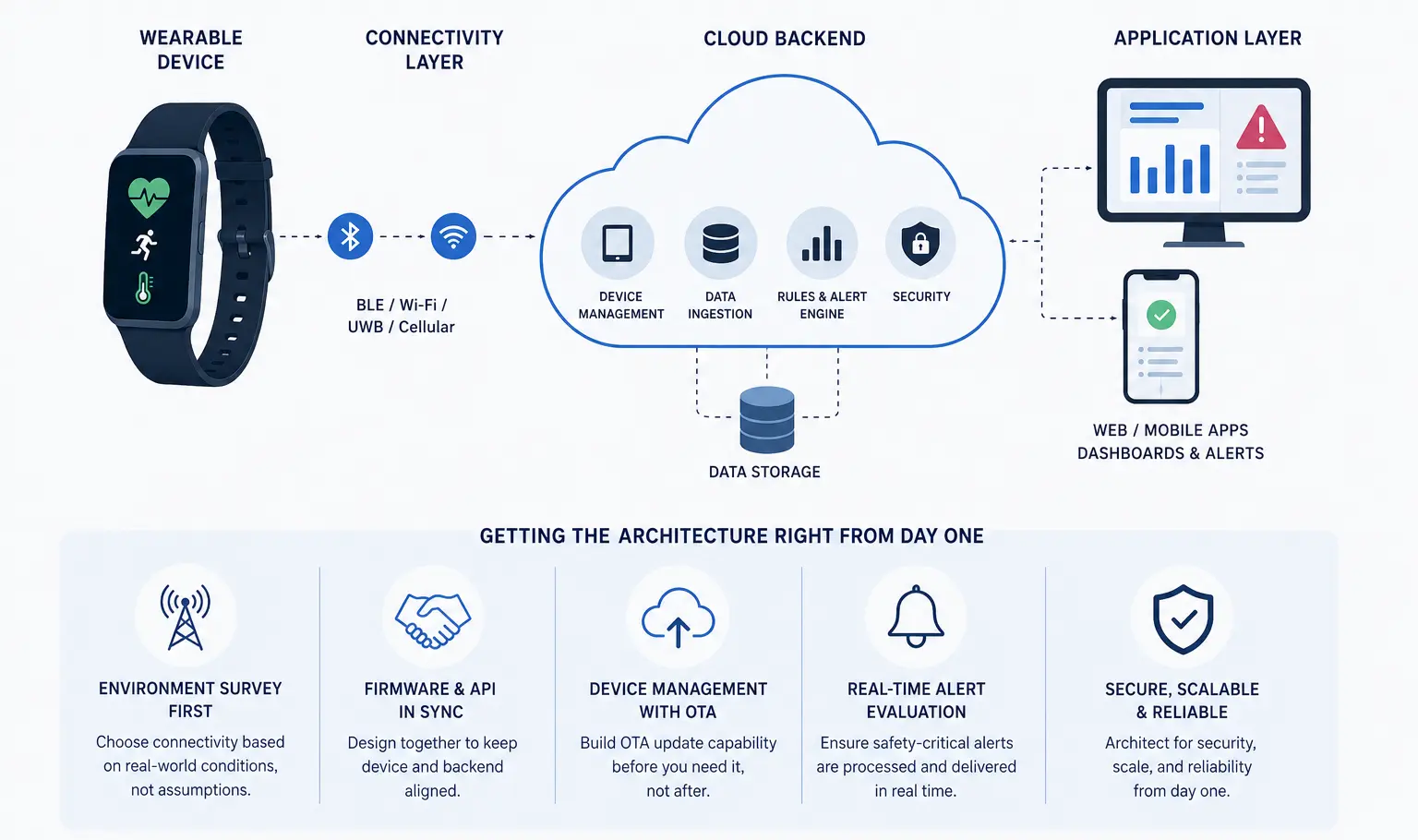
At Bluepixel Technologies, we build wearable solutions from the PCB through to the app, including firmware, the connectivity stack, the cloud backend, and the mobile or web interface your teams use. We’ve worked in healthcare, agriculture, and industrial environments, and we’ve built enough of these systems to know where the architecture breaks down under load.
If you’re planning a factory wearable deployment and want to think through the architecture before committing to hardware, visit bluepixeltech.com or get in touch. We’re happy to discuss what you’re building before the decisions become expensive to reverse.