

Skip to main content Scroll Top

NFC / RFID / QR Systems

left_bg_new
right_bg_new
Identify. Authenticate. Engage. In a Single Tap.
Every Product Has a Story. We Give It a Voice.
We architect, build, and deploy production-grade NFC, RFID, and QR ecosystems - from a single smart label on a luxury handbag to a continent-wide RFID inventory grid processing millions of scans daily. One tap. Infinite intelligence. Zero friction.

40B+

RFID Tags Shipped Globally Per Year

86%

Smartphones Now NFC-Enabled

99.9%

Read Accuracy on UHF RFID at Scale

NFC, RFID and QR Service-vector

The Triad That Bridges Every Physical Product to Its Digital Identity

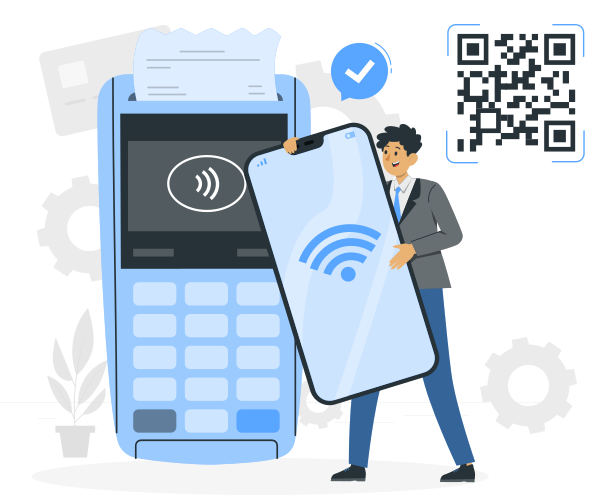
Every object on the planet is about to become addressable. NFC gives you the intimacy of a tap. RFID gives you the power of reading thousands of items without opening a box. QR gives you universal reach through any camera lens. Together, they form the backbone of the phygital economy.
Tap-to-Everything with NFC
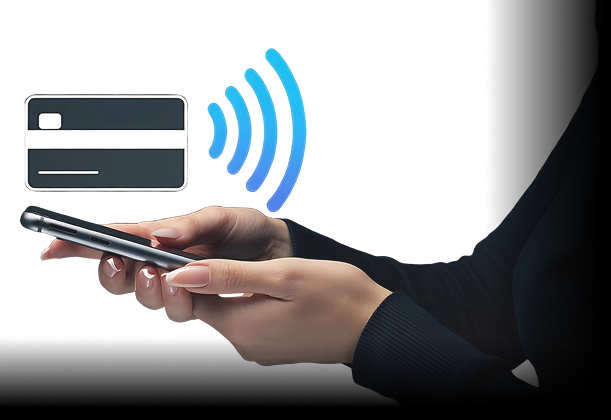
Sub-10cm range by design. No app download required. Consumers tap a product and land inside its story - authentication, warranty activation, loyalty rewards, reorder, all from a single touch on any modern smartphone.
Read 1,000 Items Per Second with UHF RFID
No line of sight. No manual scanning. A handheld reader sweeps an entire warehouse bay in seconds. Fixed portal readers count every carton on a moving conveyor without slowing the belt. Inventory accuracy hits 99%+ overnight.
Universal Access with QR Codes
Zero hardware cost. Every smartphone on Earth is a scanner. QR codes bridge the gap where NFC tags aren't viable - printed packaging, billboards, receipts, event tickets - delivering rich digital experiences from the cheapest identifier available.
Cryptographic Product Authentication
NFC chips with tamper-detect circuitry and unique cryptographic signatures make counterfeiting nearly impossible. Each tag proves its origin with a hardware-rooted digital certificate, no cloud lookup required for offline verification.
Digital Product Passports (DPP-Ready)
The EU mandates Digital Product Passports for batteries by 2027 and textiles by 2028. NFC and QR are the designated carriers. We build DPP data architectures that are regulation-ready before your competitors start planning.
Real-Time Cloud Intelligence
Every tap, scan, and read event feeds a cloud analytics engine. Geo-distributed engagement heatmaps. Grey-market detection across 50 countries. Inventory discrepancy alerts before the shelf goes empty. Data from the physical world, at digital speed.

Market Momentum & Growth Intelligence

The Auto-ID Market in 2026: Numbers That Define the Decade
RFID, NFC, and QR are no longer emerging technologies, they're the infrastructure layer beneath retail, pharma, logistics, and every supply chain on the planet. These figures aren't aspirational. They're the current state of play.
$23.4B
Global RFID Market Size (2026)
Projected to exceed $40B by 2030 at 11.2% CAGR
40B+
RFID Tags Shipped Per Year Worldwide
Apparel, logistics & pharma driving 68% of volume
$7.1B
NFC Market Valuation (2026)
Payments & smart packaging fuelling 17% annual growth
5.2T
QR Code Scans Projected by 2027
Mobile payments account for 38% of all QR interactions
NFC, RFID & QR: From Barcode Replacement to Phygital Infrastructure
Every standards revision opens new commercial use cases and we engineer every deployment with upgrade paths wired in from day one.

EPC Gen1

2003

RFID Foundation

The Auto-ID Center at MIT and EPCglobal published the first Electronic Product Code standard, enabling passive UHF tags to replace barcodes in supply chain tracking. Walmart's mandate triggered enterprise-scale adoption.

ISO 14443

2008

NFC Contactless Payments

The NFC Forum standardised peer-to-peer, card emulation, and tag reading modes. Combined with ISO 14443 and EMV specifications, NFC became the backbone of contactless payment systems worldwide.

RAIN RFID

2014

UHF RFID Alliance

The RAIN RFID alliance unified passive UHF RFID under a single brand and interoperability framework. Item-level tagging moved from pilot to mass deployment in apparel, aviation, and automotive.

QR 2.0

2020

COVID-Era Ubiquity

The pandemic permanently normalised QR scanning behaviour worldwide. Contactless menus, health passes, and digital payments turned QR codes from a niche tool into a universal consumer interaction layer.

NFC Forum Rel. 15

2024

Multi-Protocol & Wireless Charging

NFC gained multi-protocol support for simultaneous data transfer and wireless power delivery. New tag types enable tamper-detect, temperature logging, and cryptographic authentication - all from a passive, battery-free chip.

DPP / GS1 2D

2025–2027

Regulatory Mandate Era

The EU Digital Product Passport regulation and GS1 Sunrise 2027 migration are forcing every consumer product to carry a machine-readable digital identity via NFC, RFID, or QR. The compliance clock is ticking.

NFC, RFID & QR Don't Just Tag Objects. They Rewrite How Industries Verify, Track, and Engage.
From a luxury watchband that proves its authenticity with a tap, to a warehouse that counts 100,000 SKUs without opening a single carton auto-ID technology is the invisible operating system behind the next generation of physical-world intelligence.

Retail & Apparel From Shelf to Selfie

Apparel is the single largest RFID market on the planet. Over 80% of top global retailers now mandate item-level RFID tagging. A handheld reader counts an entire store's inventory in under 30 minutes a task that once took a team two full days. NFC-enabled hang tags let shoppers tap for styling suggestions, size availability, and sustainability provenance. QR codes on receipts power frictionless returns and loyalty programme enrolment. The result: inventory accuracy rises above 98%, stockouts drop by 60%, and conversion rates climb because the right product is always on the right shelf.

Key Use Cases We Deliver

Pharma & Healthcare Compliance at Every Checkpoint

Drug serialisation mandates like the EU Falsified Medicines Directive and the US DSCSA require unique identification on every pharmaceutical package. NFC-enabled smart vials provide tamper-evidence and temperature excursion logging without batteries. UHF RFID tracks surgical instruments through sterilisation cycles and operating theatres, eliminating retained-instrument risk. QR codes on patient wristbands link to electronic health records, reducing medication errors. The stakes are higher than inventory they're patient safety.

Key Use Cases We Deliver

Logistics & Supply Chain See Everything. Count Everything. Lose Nothing.

RFID transformed logistics from a barcode-at-a-time crawl to a read-everything-at-once revolution. Portal readers at dock doors capture every pallet, carton, and item as they cross the threshold — no stopping, no scanning, no errors. Warehouse put-away and pick accuracy jumps to 99.9%. Cycle counts that consumed entire weekends now happen continuously in the background. QR-coded delivery labels enable last-mile proof-of-delivery with a consumer's own phone. NFC seals on high-value shipments provide tamper-evident chain-of-custody that holds up in audits.

Key Use Cases We Deliver

Manufacturing Every Part. Every Process. Every Second.

On a modern production line, an RFID tag on every work-in-progress unit creates a digital thread from raw material to finished goods. Each station reads the tag, executes the correct recipe, and writes completion data back — no barcode scanning, no paper travellers, no mismatch errors. NFC enables tooling calibration verification: a technician taps a die or fixture to confirm it matches the work order before a single press stroke. QR codes link operators to digital work instructions, reducing training time and error rates on complex assemblies.

Key Use Cases We Deliver

Luxury & Brand Protection Proof That Can't Be Faked

Counterfeiting costs luxury brands over $50 billion annually. NFC chips with hardware-rooted cryptographic signatures embedded in handbags, watches, wine bottles, and sneakers give every product a digital birth certificate that can be verified with a smartphone tap — no app, no login, instant certainty. The same tap triggers brand storytelling, warranty activation, ownership transfer for resale platforms, and exclusive content drops. QR codes extend authentication to lower-price-point goods where NFC chip costs aren't justifiable. The tag becomes the product's identity layer — from factory to secondary market.

Key Use Cases We Deliver

Access Control & Smart Spaces One Credential, Every Door

NFC-based access control has displaced legacy magnetic stripe and proximity cards in enterprise campuses, co-working spaces, and multi-tenant buildings worldwide. A single NFC credential on a smartphone or wearable opens doors, activates lifts, books meeting rooms, and pays for canteen meals. RFID enables zone-based occupancy tracking for space utilisation analytics and emergency mustering. QR visitor passes issued via email eliminate front-desk bottlenecks. The building becomes context-aware knowing not just who is inside, but how every square metre is being used.

Key Use Cases We Deliver

Food & Beverage Farm to Fork, Verified

Consumers increasingly demand proof of provenance, and regulators are catching up. NFC-enabled smart caps on olive oil, honey, and premium beverages confirm the bottle hasn't been refilled with a substitute. RFID tracks crates and pallets through cold chain from processing plant to retail shelf, logging temperature at every transition. QR codes on packaging link consumers to origin stories, batch-specific harvest data, allergen information, and recycling instructions — turning every label into a two-way communication channel that builds trust and drives repurchase.

Key Use Cases We Deliver

We Don't Ship You Tags and Wish You Luck. We Build the Entire Identification Ecosystem.
Most RFID vendors stop at hardware. We go from tag IC selection and antenna design all the way through reader firmware, mobile SDK development, cloud analytics, ERP integration, and Digital Product Passport data models, because a tag without a platform is just a sticker with an antenna.
Layer 1
Tags, Labels & Inlays
Layer 2
Readers & Edge
Layer 3
Cloud & Data Platform
Layer 4
Application Layer

How We Take You From Zero to Deployed

No Guesswork. No Bloated Timelines. Just Working Auto-ID, Worldwide.

01

Discovery & ID Strategy

We start with your operational pain, not the spec sheet. Tag technology evaluation (NFC vs UHF RFID vs QR vs hybrid), read-range testing, regulatory review, and a feasibility report before a single tag ships.

02

Tag & Reader Proof of Concept

IC selection, antenna design, inlay prototyping, reader hardware evaluation, mobile NFC SDK integration, and end-to-end read testing. You get working hardware with real scan data, not a slide deck.

03

Cloud & Application Build

AWS IoT or GS1 EPCIS integration, real-time dashboards, consumer-facing tap experiences, ERP/WMS connectivity, DPP data models, authentication engines, and API-first architecture. Battle-tested before pilot.

04

Pilot Deployment

Controlled rollout at a single facility, store, or product line. We measure read accuracy, tag survivability, scan conversion, system throughput, and edge-case handling, then iterate until every KPI hits target.

05

Multi-Site / Global Rollout

Full-scale deployment with automated tag provisioning, multi-region cloud infrastructure, supply chain partner onboarding, operational dashboards, and team training. Your organisation gets certified and handed the keys.

06

Managed Support & Evolution

Post-launch SLA-backed support. Tag lifecycle management, firmware updates, DPP compliance updates, security patches, and migration planning as NFC/RFID standards and GS1 requirements evolve.
What's Coming Next and Why It Reshapes Your 2026–2030 Product Identity Strategy
Auto-ID is entering a regulatory-driven, AI-amplified acceleration phase. We architect every deployment with an upgrade path to these near-horizon capabilities, so your infrastructure compounds in value instead of expiring.
2026–2027
EU Digital Product Passports (DPP) Go Live
Batteries first in 2027, textiles by 2028, consumer electronics by 2030. Every product entering the EU market will require a machine-readable digital identity carrying lifecycle, sustainability, and circularity data. NFC and QR are the mandated carriers.
2026–2027
GS1 Sunrise 2027: 2D Codes Replace Barcodes
GS1 is migrating the world's point-of-sale systems from 1D barcodes to 2D codes (QR and Data Matrix). A single code will carry product identification, batch data, expiry dates, and URLs, collapsing multiple labels into one scannable surface.
2026–2028
AI-Powered RFID Analytics at the Edge
Machine learning models running on RFID reader edge processors will detect inventory anomalies, predict stockouts, and identify theft patterns in real time without sending every tag read to the cloud. Actionable intelligence at the speed of the conveyor belt.
2027–2030
NFC Sensing: Temperature, Moisture & Chemical Detection
Next-generation NFC ICs with integrated sensors will turn passive tags into environmental monitors. A smartphone tap on a food package will reveal its temperature history. A tap on a pharmaceutical vial will confirm cold chain integrity, no external sensor hardware required.

Auto-ID Technology Comparison

NFC vs. RFID vs. QR - and How They Compare to Other Identification Methods
Choosing the right identifier or the right combination is the first architectural decision that determines project success. Here's how the core auto-ID technologies stack up.
ParameterNFC (HF)UHF RFIDQR CodeBarcodeBLE BeaconGPS Tracker
Read Range< 10 cm1–15 mCamera distance5–30 cm1–100 mGlobal
Line of SightNot requiredNot requiredRequiredRequiredNot requiredNot required
Read Speed1 at a time1,000+ /sec1 at a time1 at a timeN/AN/A
Tag Cost$0.05–0.50$0.03–0.20Free (print)Free (print)$5–25$15–150
Data CapacityUp to 8 KB96–512 bitsUp to 4,296 chars20–25 chars31 bytes (adv)N/A
Read/WriteYesYesRead-onlyRead-onlyBroadcastN/A
Power SourcePassive (no battery)Passive (no battery)NoneNoneBattery (1–5 yr)Battery / wired
SecurityAES-128 / CryptoPassword / cryptoNone (URL-based)NoneLimitedModerate
Best ForAuthentication & tapBulk inventoryUniversal consumerBasic scanningProximity triggerReal-time location

* Most production deployments combine two or more auto-ID technologies. We help you architect the optimal hybrid strategy for your use case, budget, and regulatory requirements.

Every Question Your Stakeholders Will Ask, Answered.
We've fielded these across hundreds of auto-ID evaluations. If yours isn't here, that's exactly what the free strategy session is for.

RFID is the broad technology family using radio waves for identification. NFC is a short-range subset of HF RFID (13.56 MHz) designed for secure, one-to-one interactions like payments and authentication. QR is an optical code scanned by cameras – zero cost per tag, universal reach, but no hardware security. Choose NFC for authentication and consumer engagement. Choose UHF RFID for bulk inventory and supply chain visibility. Choose QR for universal access at minimal cost. Most enterprise deployments combine two or all three.

Yes. Apple opened background NFC tag reading on iPhone 7 and later with iOS 13. Android has supported NFC since version 4.0. Today, over 86% of smartphones globally are NFC-enabled. For basic URL triggers and NDEF data, no app installation is needed, the tag interaction is handled natively by the operating system. For advanced features like cryptographic verification, a lightweight app or web-app wrapper enhances the experience.

A DPP is a structured digital record linked to a physical product that carries its full lifecycle data such as materials, origin, carbon footprint, repairability, and recyclability. The EU is mandating DPPs for batteries in 2027, textiles in 2028, and most consumer goods by 2030. If you sell products in the EU or plan to, building DPP infrastructure now gives you a compliance head start and positions your brand as a sustainability leader.

Modern UHF RFID readers with Impinj or Zebra chipsets can read over 1,000 tags per second. A fixed portal reader at a dock door captures every tagged item on a pallet as it moves through – no stopping, no orientation requirements. In controlled warehouse environments, read accuracy exceeds 99.9% at distances up to 10–15 metres with high-gain antennas.

Absolutely. NFC’s sub-10cm range makes interception extremely difficult by physics alone. Authentication-grade NFC tags from NXP and Infineon include hardware-rooted cryptographic signatures, tamper-detect circuitry, and unique chip IDs that cannot be cloned. Payment NFC adds EMV-grade AES-128 encryption, tokenisation, and dynamic cryptograms. It’s the same security standard protecting billions of contactless payment transactions daily.

Ready to Give Every Product
A Digital Voice?
Whether you're authenticating luxury goods, instrumenting a warehouse, launching a Digital Product Passport, or building a tap-to-experience consumer platform, your NFC/RFID/QR journey starts with a 30-minute conversation. No pitch. Just architecture.