Cold Chain Failures: How IoT Sensors Keep Perishable Goods Safe in Transit
July 21, 2026 |
By Rushikesh Sanghani - Bluepixel Team
Cold Chain Failures: How IoT Sensors Keep Perishable Goods Safe in Transit
The truck carrying vaccines susceptible to heat begins its journey at 2 am from the warehouse. There is nothing to worry about at all because everything seems fine. The documentation is fine, the trucker is punctual and the refrigeration system is functioning. The consignment arrives after a delay of 12 hours and almost half of it becomes unfit for use. This happens during the 40-minute duration between the warehouse and the delivery site where the temperature becomes very high.
This is not an isolated incident but a regular phenomenon that occurs in various industries including food, pharmaceuticals and agriculture.
The Real Cost of Cold Chain Failure
Cold chain can be defined as the temperature-controlled flow of perishables from point of origin to point of destination, such as the transport of frozen products from manufacturing plants to retail stores or the transport of medicines from manufacturers to healthcare facilities. Temperature is the most important factor throughout the process, and failure of which would render the product useless.
The stakes involved are getting higher with every passing day. The global cold chain monitoring market is expected to increase from $8.31 billion in 2025 to $15.04 billion by 2030, and organisations such as the FDA, USDA, and EMA are placing stringent restrictions on continuous monitoring and record-keeping of temperature-controlled products. It is evident that pharmaceutical logistics companies have already caught up with this trend, where about 69 percent of them employ automation in their cold chain processes for vaccines and biological products.
Whereas companies that are still operating under the system of manual inspections, paper trails, and "let's see what happens when it gets here" risk not only spoilage but also risks of recall, fines, damaged relationships with consumers, and in the case of medicines, actual patient harm.
Why Cold Chains Actually Fail
Failures of cold chain do not occur due to any one single factor. Rather, it is an accumulation of minor deficiencies that pile up along a long voyage:
Equipment failure.
The refrigeration systems fail, the thermometers become uncalibrated, or the compressor becomes unable to cope with the heat wave.
Human error.
An open loading dock door for a couple of minutes more than needed, a driver forgetting to set the right temperature, or a warehouse employee placing a pallet in the wrong section.
Multiple handoffs, zero visibility.
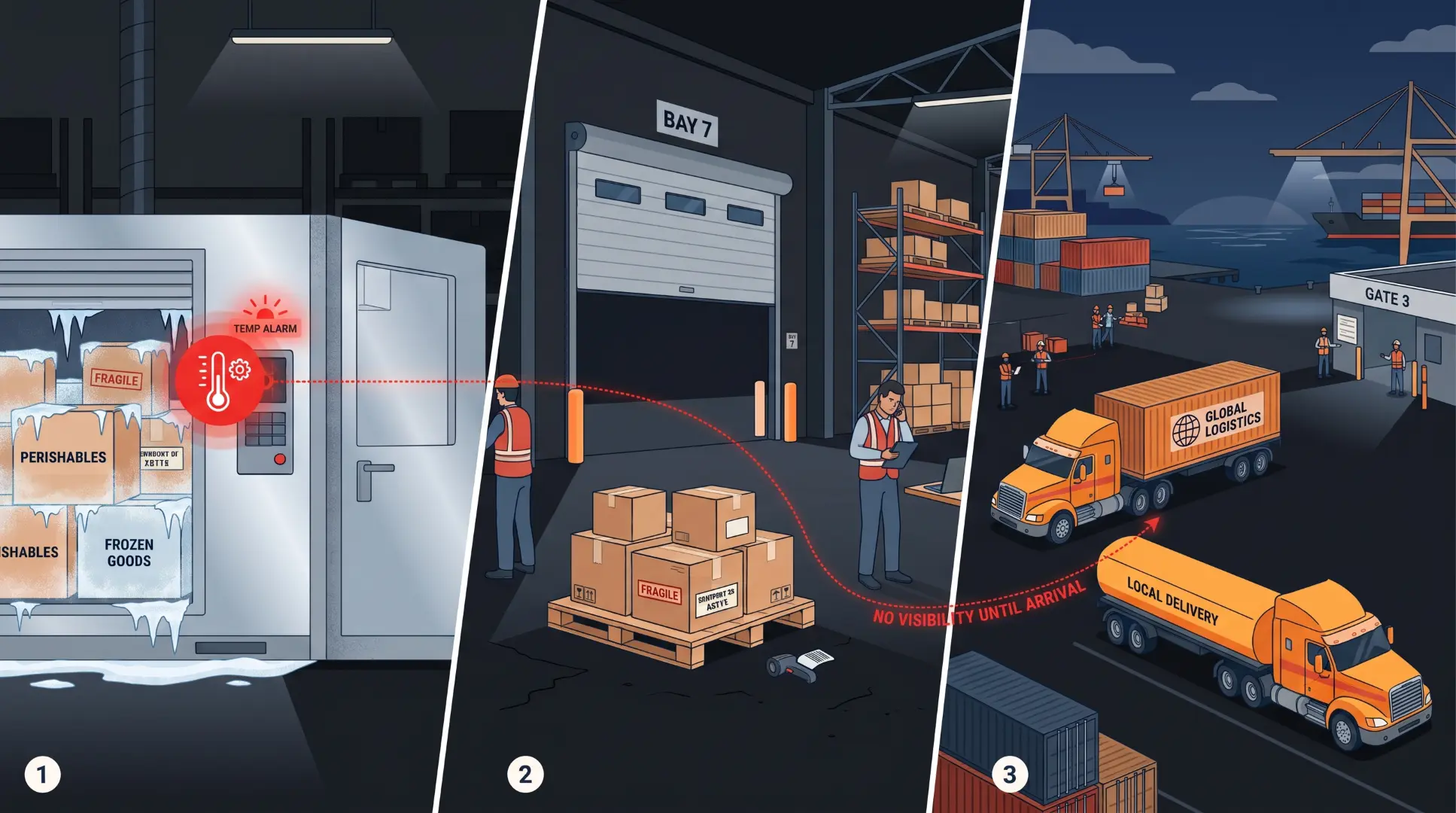
Goods could travel from a truck to a port, to a warehouse and back to another truck before they reach their destination. Every transfer is a risk because responsibility is unclear and problems only become obvious at the next control point, if at all.
Long transit times.
The longer it takes for the goods to arrive at their destination, the greater the exposure to temperature changes, even when crossing international borders or making last-mile deliveries in rural areas.
And this is the common denominator in all of these issues – late realization of an issue. And this is exactly the kind of problem that IoT sensors solve.
How IoT Sensors Solve the Problem
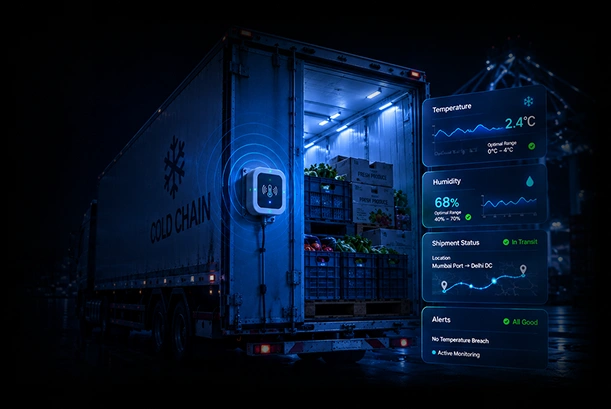
Rather than discovering the truth after a problem arises, with IoT cold chain monitoring, businesses get real-time insight into exactly what is happening to the shipment.
That is how it actually works:
1.
Sensors do the watching.
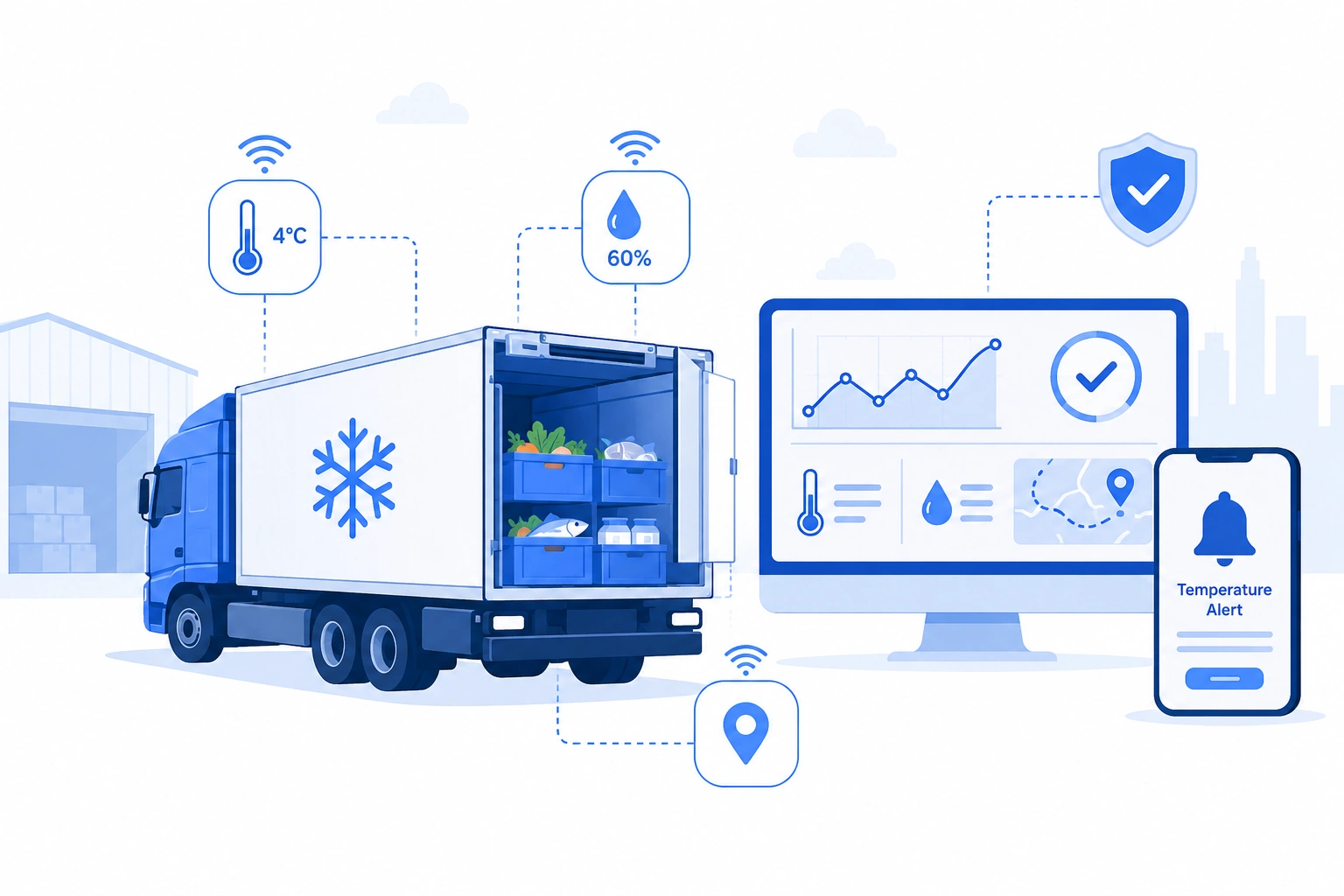
These small wireless sensors can be embedded in the container, pallet or vehicle and constantly monitor not only the temperature but also the humidity, shock, light exposure, and even tilt.
2.
Data moves instantly.
This sensor information does not remain locally stored and is sent through the gateway to the cloud dashboard, where logistics personnel can check the status of all the shipments in a single-screen view.
3.
Alerts happen mid-transit, not after arrival.
An alert is sent immediately if there is a breach in either of the thresholds, giving teams the opportunity to act while the cargo is in transit, which could mean rerouting, repairing machinery, or tagging the shipment for inspection at the destination.
4.
AI adds a predictive layer.
In some cases, AI is now being used to build a predictive layer over this data set by analysing the historical data in search of routes, vehicles, or other factors that may have been responsible for breakdowns in the past. This concept has already been touched upon in the previous section where we discussed the way in which AI thinks about the world around us: using patterns.
5.
Records create compliance-ready audit trails.
Each measurement is automatically logged, thus creating a tamperproof record that fulfils all the FDA, EMA, and GDP documentation requirements.
Not All Connectivity Is the Same
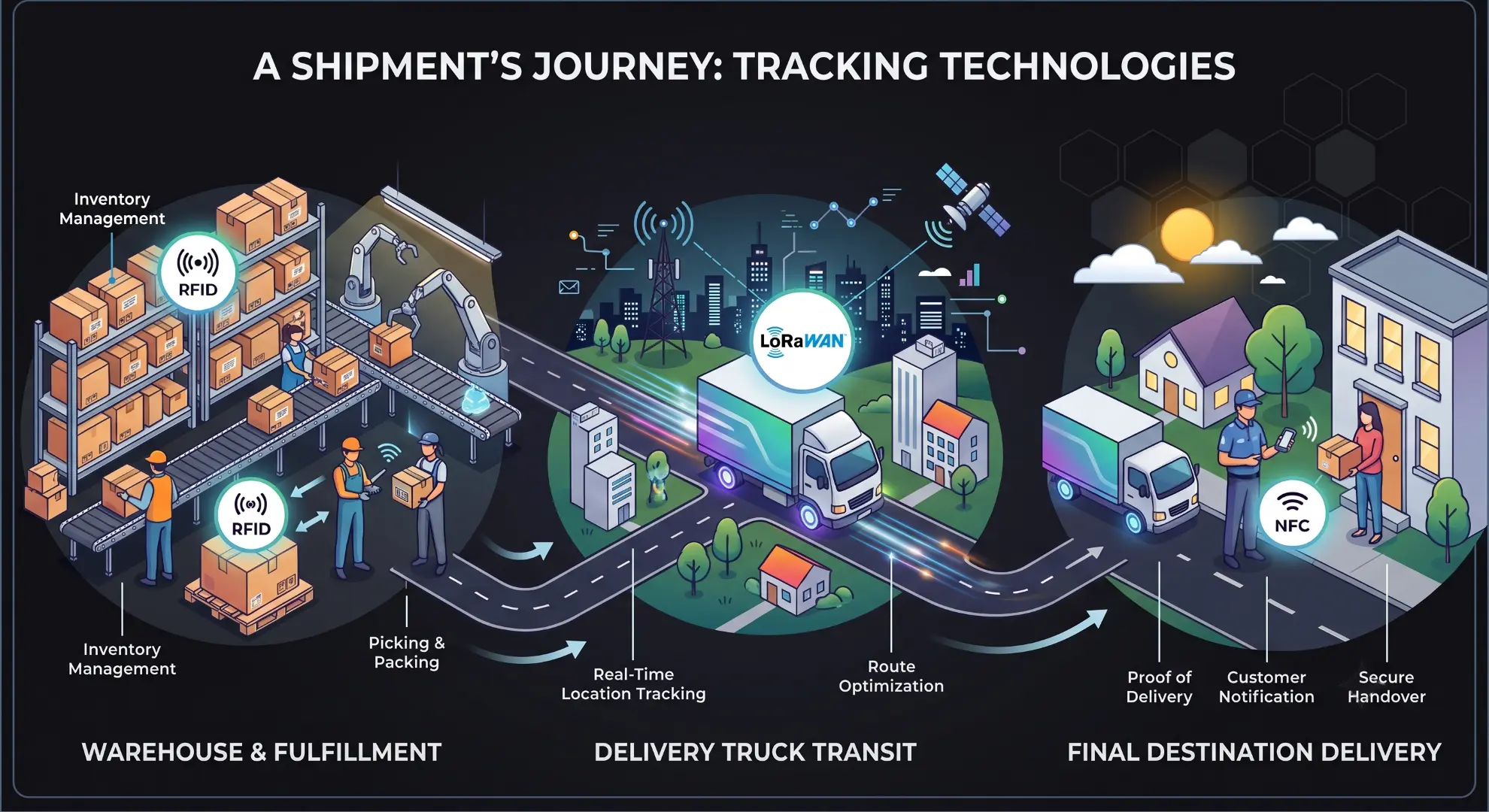
There is one aspect that tends to slip away unnoticed when talking about cold chain monitoring through IoT: the technology behind the "IoT" actually varies. It is not one type but several connectivity technologies designed to suit various needs of the logistics process.
BLE (Bluetooth Low Energy)
BLE (Bluetooth Low Energy) is used for short-distance connectivity for tracking in a warehouse or checkpoint environment, when communication should take place without affecting the power level of the device.
RFID
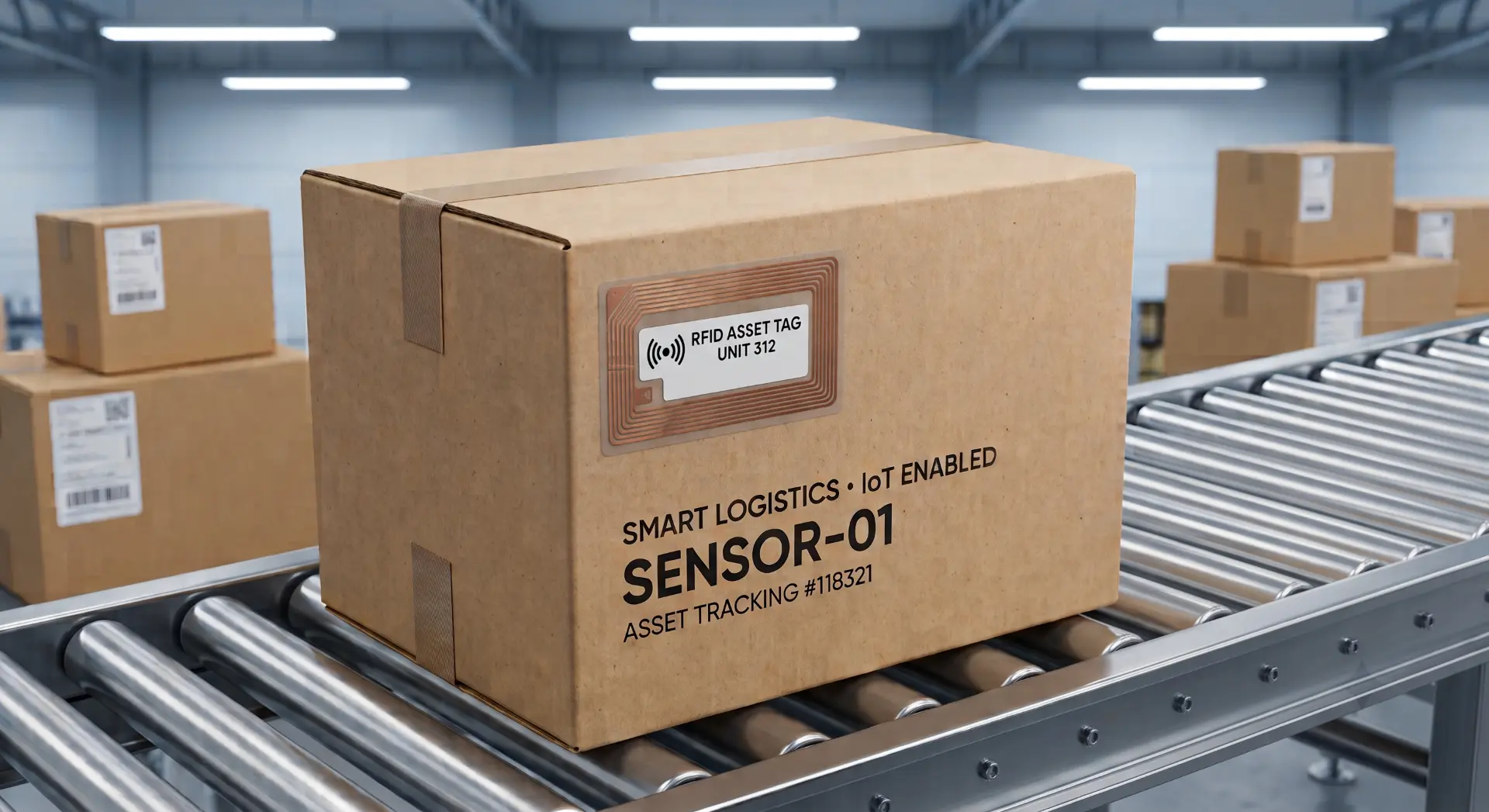
RFID is best for quick identification of the pallet/container as it passes through the checkpoint.
LoRaWAN
LoRaWAN is made specifically for long-distance transmission over low-power connections, hence the name, which makes it perfect for tracking shipments on long trips where there can be problems with cell coverage.
NFC
NFC provides an opportunity for rapid verification of handovers, which is quite convenient for verifying the transfer from one person to another during delivery.
The companies that benefit most from cold chain IoT are not those that implement the same technology everywhere; they use the appropriate technology for the appropriate phase of the journey.
Seeing It Work in the Real World
This is not a theoretical proposition. Back in early 2025, for example, logistics service provider Shipwell embedded IoT tracking sensors provided by Tive into its transportation management system, providing shippers with real-time insights into location, temperature, humidity, shock, light, and tilt for the freight on the move. This approach allows for a more transparent and accountable supply chain, where errors can be found and fixed before any loss is incurred.
As more and more logistics companies start adopting the same strategy and embedding sensor data into their existing platforms, cold chain management becomes a natural part of the supply chain process.
What This Means Going Forward
In the past, cold chain failures were considered inevitable, something you accepted and planned around a certain amount of loss. But that's not going to cut it anymore. With increased regulations and customers wanting proof of product integrity, there is a need for visibility that allows you to take action, not information that you can analyse later.
Fortunately, the technology needed for this is here and advancing rapidly. The difficulty with most companies now is not whether to implement IoT monitoring but how to implement IoT monitoring for your specific use case.
Let's Talk About Your Supply Chain
Each cold chain is unique, and there's no universal approach to sensors that works for all. In case of spoilage concerns, compliance issues, or even if you simply need more insight into the actual state of your freight, please let us know how we can assist you.
Reach out to our team we'll walk you through how BLE, LoRaWAN, NFC, and RFID can work together for your specific cold chain, no generic pitch involved.