Building an AI-Powered Greenhouse Monitoring System
July 29, 2026 |
By Deep Gajera - Bluepixel Team
Building an AI-Powered Greenhouse Monitoring System: How AI and IoT Are Revolutionizing Modern Agriculture
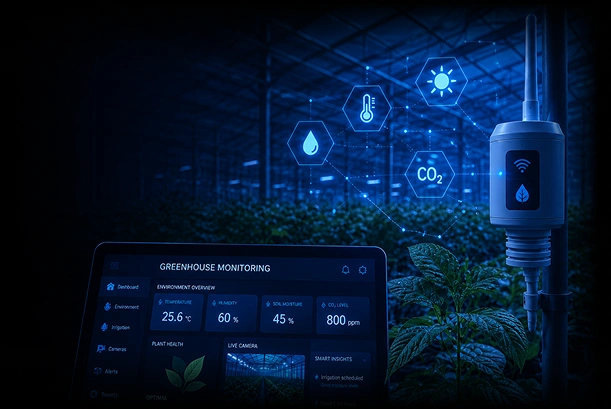
Walk into a greenhouse at 3 a.m. and you'll usually find nobody there. That's the problem. Crops don't stop needing attention just because the humans went home. A two-degree temperature swing, or one missed irrigation cycle, can quietly cost a season's yield before anyone notices. That's the case for building an AI-powered greenhouse monitoring system: IoT sensors and machine learning watching the crop around the clock, catching trouble while it's still small.
Here's what this post covers: what an AI-powered greenhouse actually is, which sensors matter, how AI handles irrigation and climate decisions, what real-time alerting looks like in practice, and where the technology is headed. If you're a greenhouse owner, an agritech founder, or evaluating smart farming infrastructure for your team, this should give you a straight answer, not a sales pitch.
What Is an AI-Powered Greenhouse, Exactly?
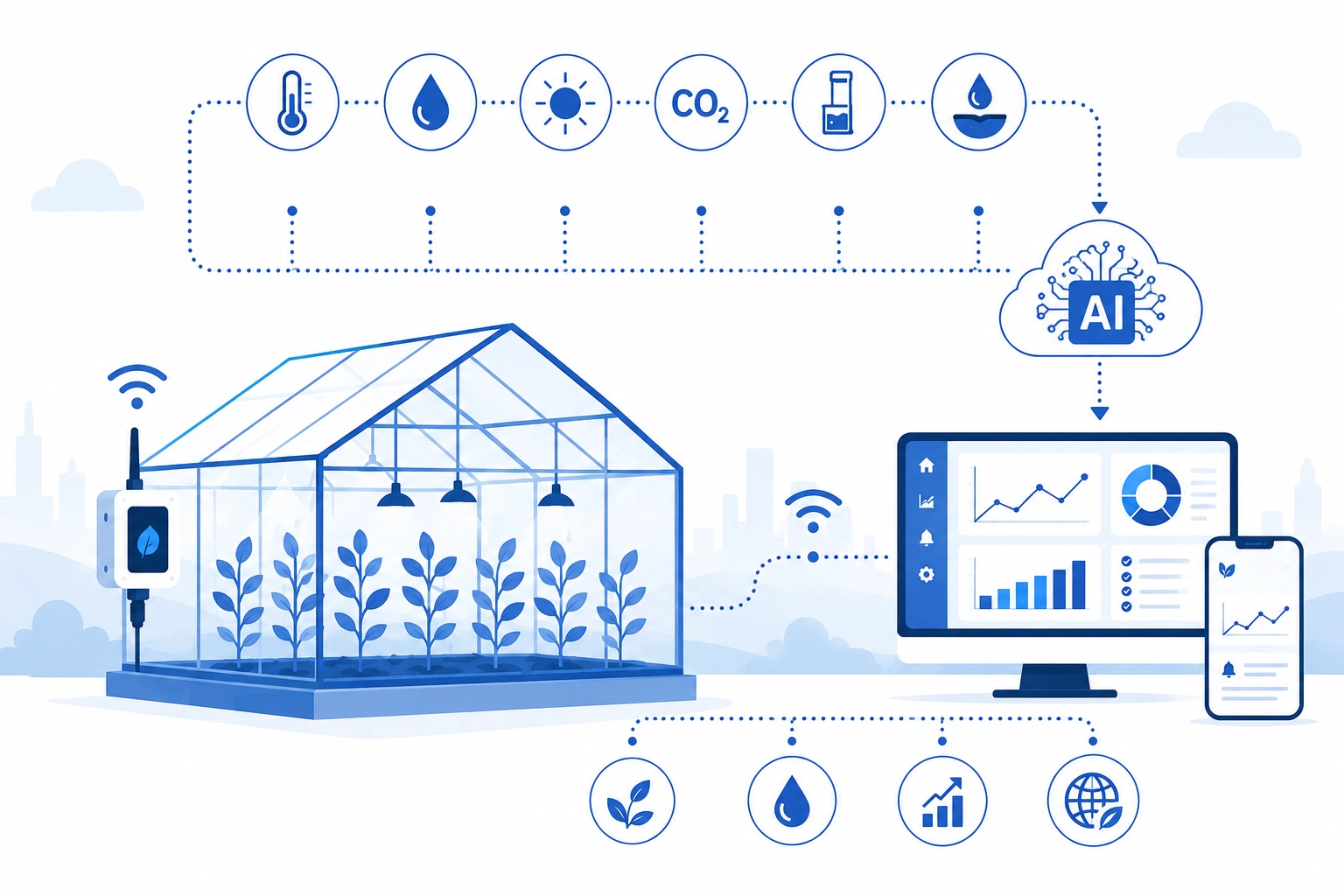
Strip away the buzzwords and an AI-powered greenhouse is a regular greenhouse with a nervous system bolted on. Sensors do the job a farmer's senses used to do: reading temperature, humidity, soil, light, constantly. Instead of someone walking the rows twice a day, software watches the readings nonstop and spots patterns a person walking past twice a day would never catch.
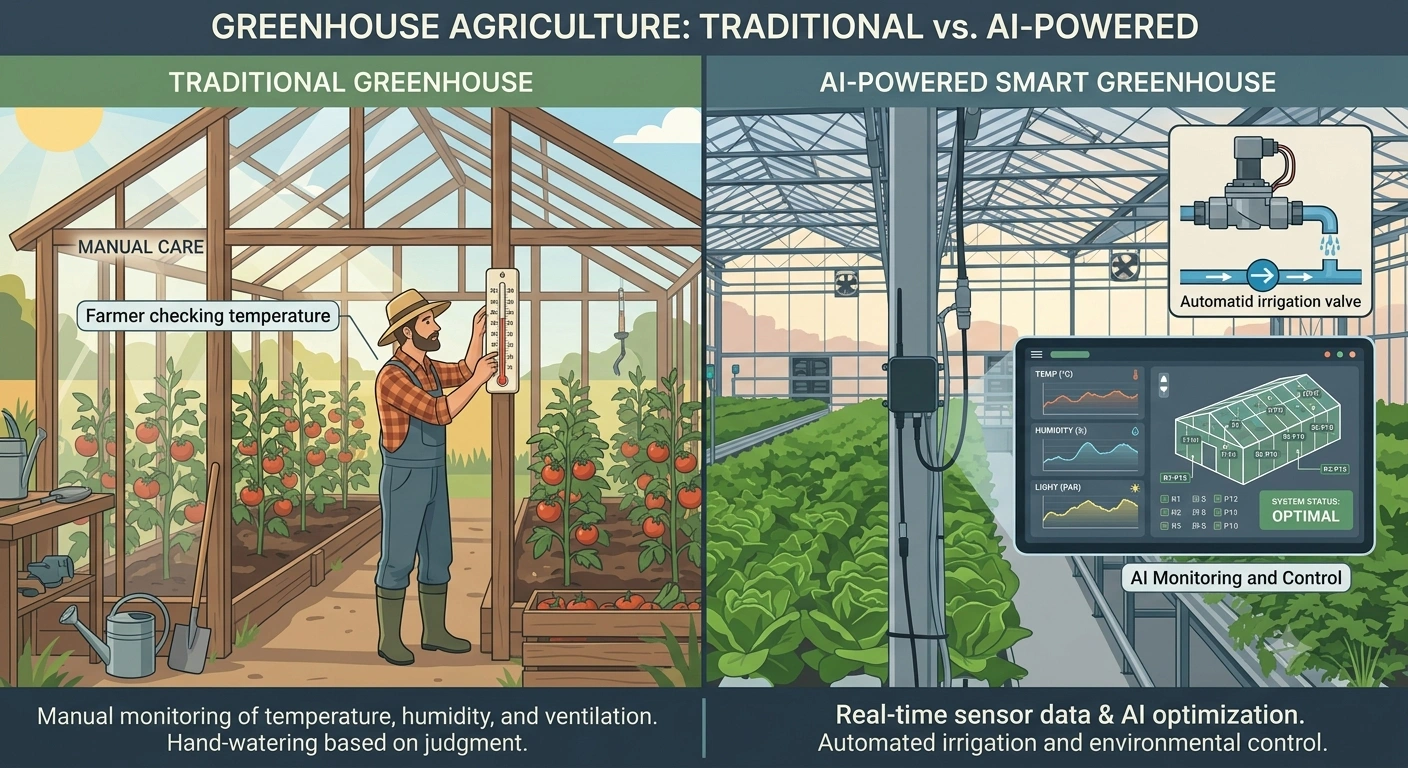
The gap between this and a basic "smart" greenhouse is what happens with the data. A simple automated system turns on a fan past a fixed number.
An AI-driven one learns how a specific crop responds over time, predicts stress before it's visible, and adjusts climate, irrigation, and lighting together instead of one dial at a time.
For a mid-sized grower, that gap is the difference between reacting to a disease outbreak after it's spread through a row, and catching the humidity spike that caused it three days earlier. It's less about automation for its own sake, more about seeing something growers previously had no way to see.
The Sensors That Make It Work: Temperature, Humidity, Soil Moisture, and CO₂
None of this works without decent sensor hardware. Four readings do most of the heavy lifting.
TemperatureSensors
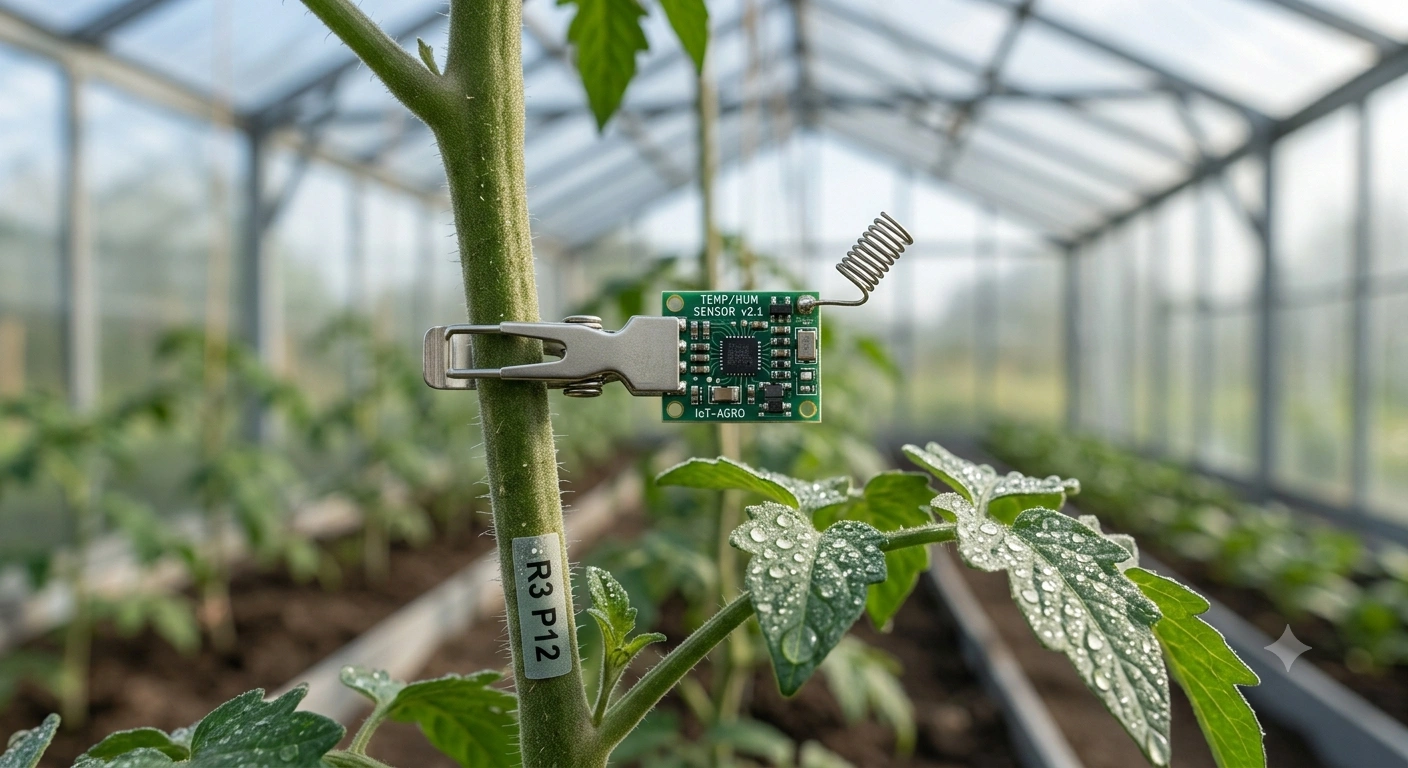
Temperature sensors track air and, in better setups, the canopy itself, since leaf-level heat can run noticeably different from the reading at head height.
HumiditySensors
Humidity sensors matter just as much: warm and humid together is the standard recipe for fungal disease.
SoilMoistureSensors
Soil moisture sensors, usually capacitive probes at root depth, tell the system how much water the plant can actually reach, rather than guessing off a generic schedule.
CO₂Sensors
CO₂ rounds it out, since carbon dioxide concentration drives photosynthesis directly, and supplementing it only helps if you can measure it.
Most of these connect over LoRaWAN or BLE mesh rather than wires, for good reason. Running cable through a humid, chemically active greenhouse gets expensive and unreliable fast. A well-built network places nodes every few meters, because the section near the door and the section against the back wall rarely read the same.
AI-Driven Irrigation and Climate Control
This is where the system earns its keep. Raw sensor data is useful. Data plus a model that acts on it is the actual point.
Irrigation
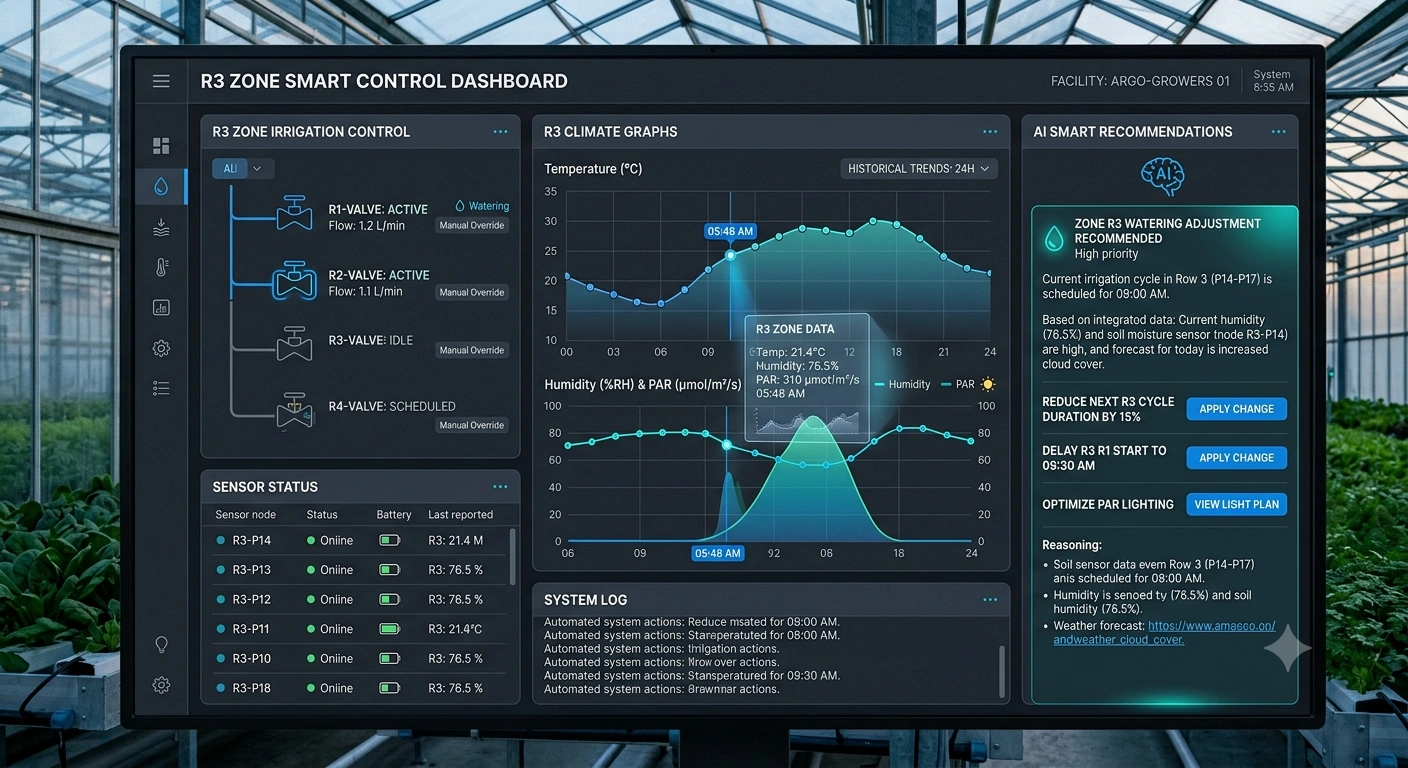
Models combine soil moisture with weather forecasts, crop growth stage, and past water use to figure out exactly how much a section needs, instead of running on a timer. Older drip systems water on schedule whether the soil needs it or not. An AI model notices a cloudy week means slower transpiration and backs off automatically, no one touching a dial.
Climate Control
Rather than a thermostat that opens vents once it's already too warm, the system can see a heat spike coming in the forecast and start adjusting shade or ventilation ahead of it. Over time it gets better at reading how a particular structure, given its materials, orientation, and airflow, responds to the outside world, because every greenhouse behaves a little differently.
For growers, that means fewer manual overrides, and fewer stretches where a plant sits in slightly wrong conditions for hours before anyone notices.
Real-Time Monitoring, Alerts, and Early Disease Detection
Sensors and automated irrigation handle half the job. The other half is making sure a person finds out the moment something needs a human decision.
Alert
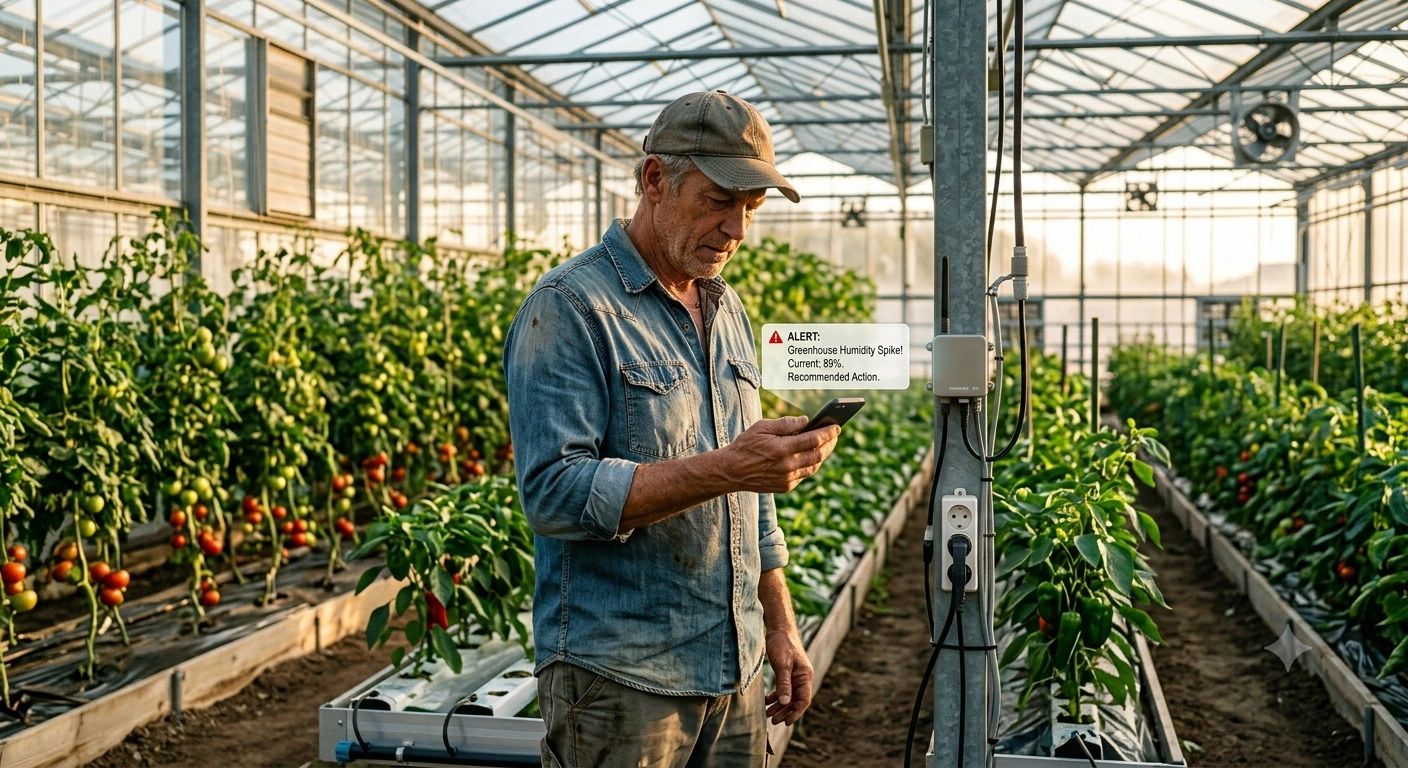
Alerts go out through an app or SMS the instant a reading crosses the line: a humidity spike, a soil probe drying out faster than it should, a CO₂ drop because the supplementation system quietly failed. Greenhouse problems compound fast. A leaky valve ignored for six hours floods a root zone. A dead ventilation fan on a hot afternoon stresses a whole section before closing time.
Computer vision
Computer vision adds another layer. Cameras over the rows can catch leaf discoloration or odd spotting days before it's visible to someone walking past. Early detection matters here more than almost anywhere else in the system, since fungal outbreaks and pests are far easier to stop in their first days than after they've spread.
Between the alerts and the vision system, growers spend less time on routine walkthroughs and more time actually fixing what gets flagged.
The Benefits, and Where Smart Agriculture Is Headed Next
The payoff, in practice: water use drops because irrigation stops guessing, yields even out because crops spend less time stressed, and one person can now watch several bays instead of walking each one.
A few things worth watching next.
Predictive Yield Modeling
Getting good at forecasting harvest volume weeks out from growth patterns, which helps with planning logistics and sales.
Edge AI
pushing processing onto the sensor hardware itself so latency drops and the system stops depending on a solid internet connection, which matters a lot at rural sites.
Robotics Integration
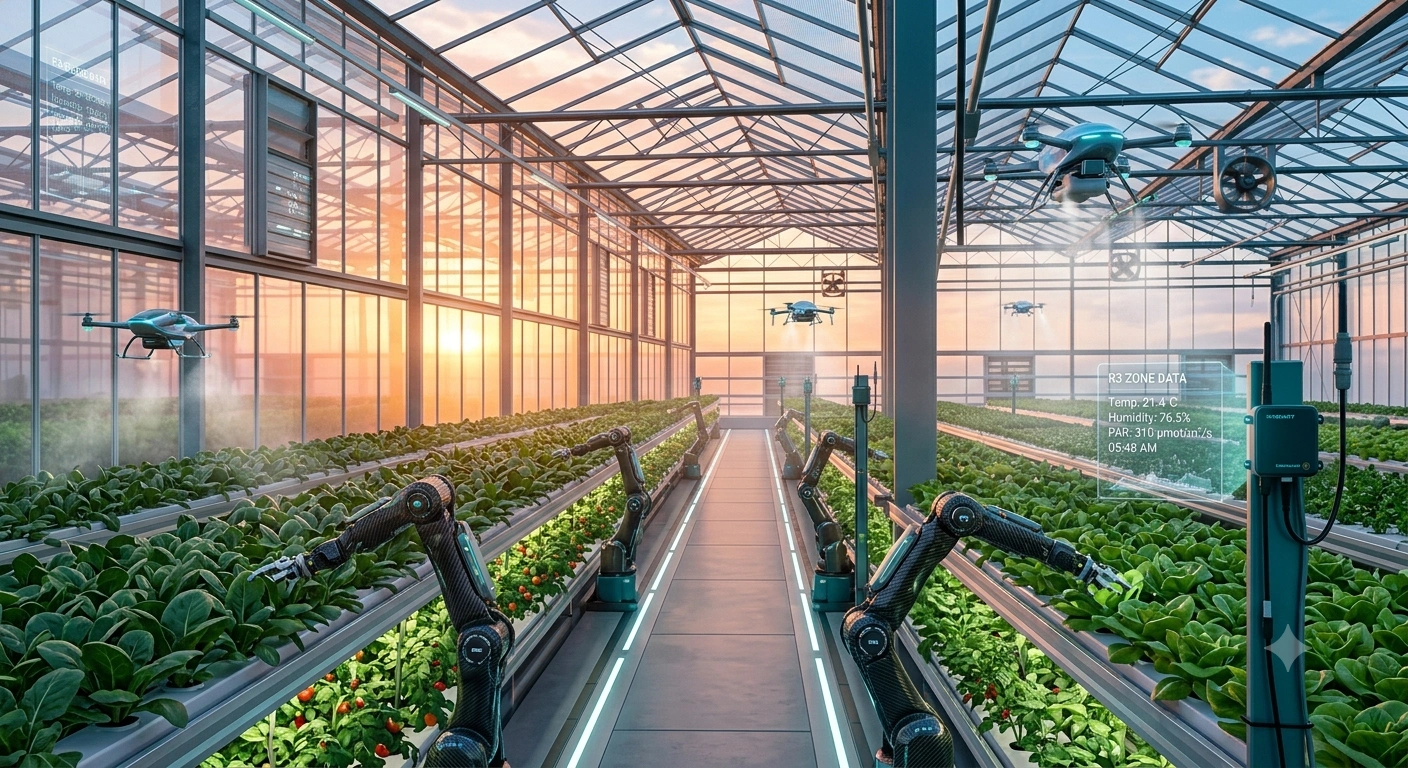
Robotics for pruning and harvesting are starting to plug into the same sensor networks, timing their work off the same environmental data.
None of it replaces a grower's judgment. It just clears out the guesswork and the 3 a.m. blind spots that used to come with the job.
Final Thoughts
An AI-powered greenhouse monitoring system solves a real, unglamorous problem: crops need constant attention, and no one can staff a greenhouse 24 hours a day. Combine sensors for temperature, humidity, soil moisture, and CO₂ with models that handle irrigation, climate, and early disease detection, and you get something close to round-the-clock supervision without the round-the-clock labor. As predictive modeling, edge AI, and robotics keep maturing, that gap between old-style greenhouse farming and the AI-driven version is only going to get wider.
Looking to build an AI-powered smart agriculture solution? Bluepixel Technologies develops custom AI, IoT, BLE, LoRaWAN, mobile, and cloud solutions for modern farming. If you're ready to move past manual monitoring to a system that actually thinks alongside your crops, get in touch and let's talk about what that looks like for your greenhouse.