

Building AI Chatbots That Control IoT Devices Using BLE

- June 04, 2026 |
- By Deep Gajera - Bluepixel Team

- IoT
- BLE
- AI Integration
How AI Voice and Chat Assistants Are Reshaping IoT Control
Technical Foundation
Understanding BLE Architecture for AI-Driven Device Control

Architecture Deep-Dive
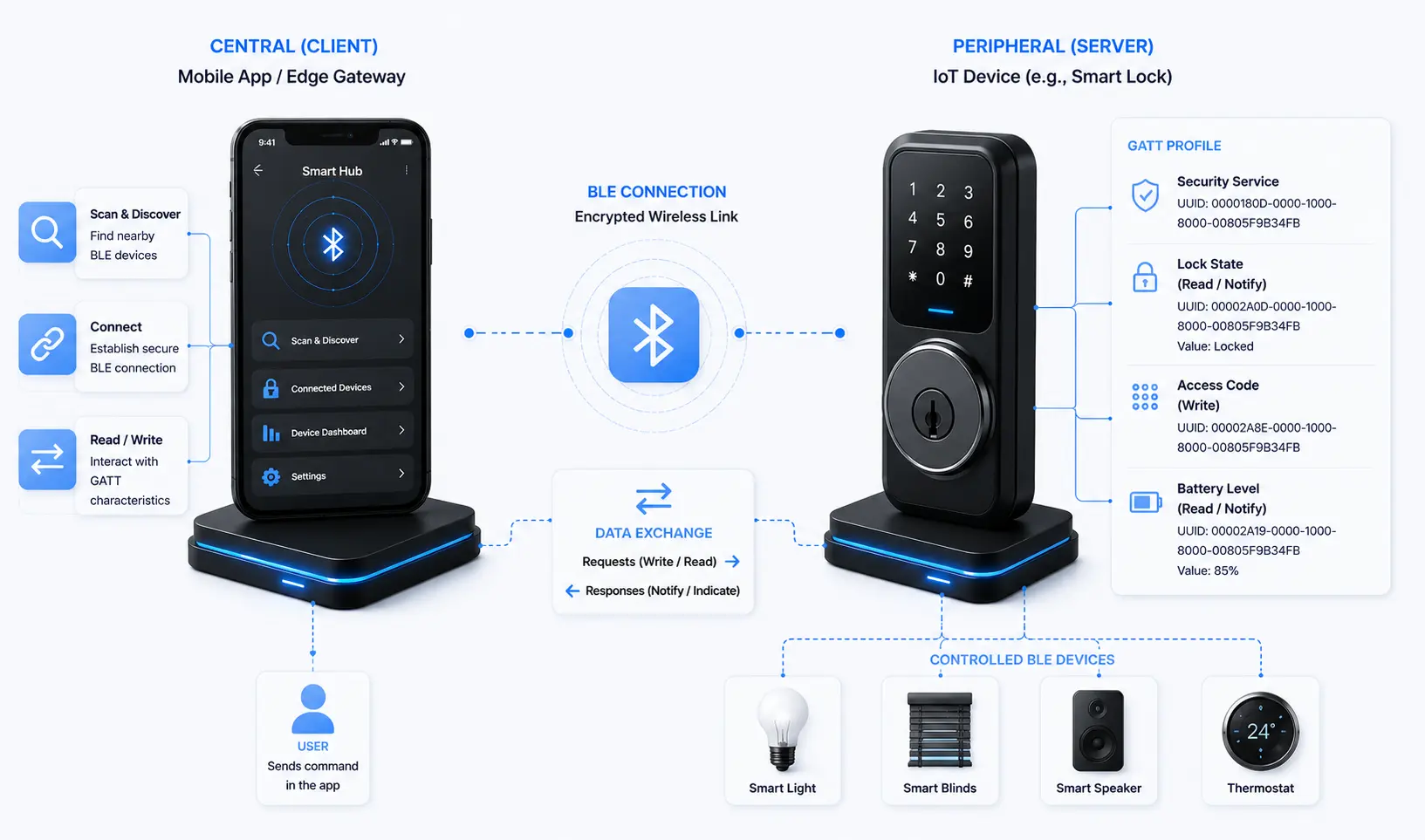
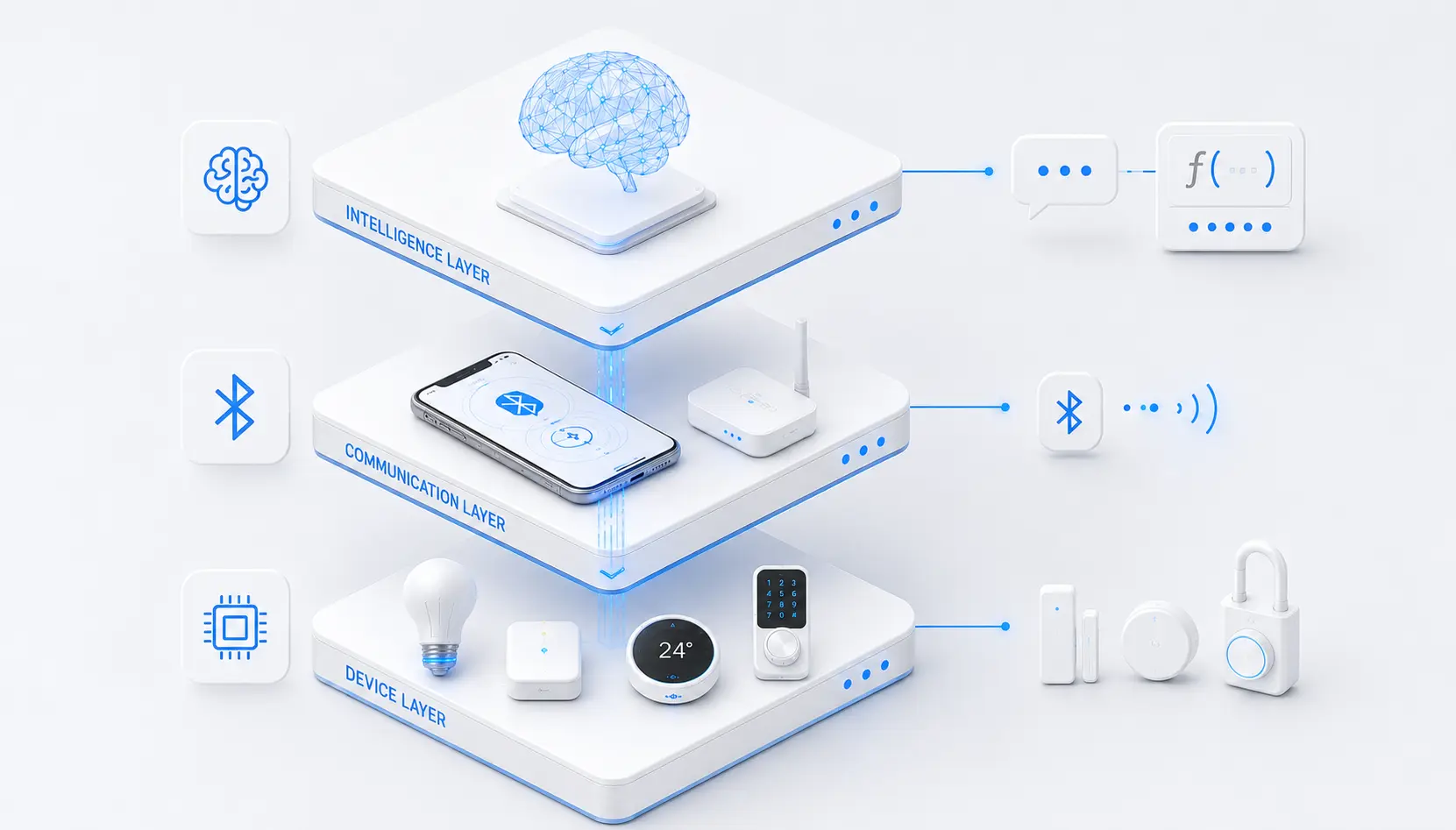
The System Architecture: Three Layers That Matter

Intelligence Layer

Communication Layer

Device Layer
Stateful Context and Multi-Turn Conversations
The part that makes LLM-based control feel genuinely different from keyword parsing is conversational memory. A user says “Turn the bedroom lights on,” then follows up with “Actually, make them warmer.” The AI resolves “them” to the bedroom lights without being told again. This works because you pass the full conversation history with every LLM call, along with a live snapshot of device states. The model reasons about what the user likely means given both context and current environment, not just the last message in isolation.
Production Engineering
Integrating the Full Stack: Mobile App, Cloud, and BLE in Practice
Security
Security Considerations You Cannot Skip

Command Whitelisting

BLE Pairing & Bonding

API Authentication

Structured Function Calling

Audit Logging

Confirmation UX
Bluepixel Technologies builds intelligent IoT ecosystems that bring BLE hardware, mobile applications, and AI integration together into a single coherent product. If you are working on a smart home platform or IoT product and want a team that has done this end-to-end, reach out to Bluepixel Technologies.