



Wearables
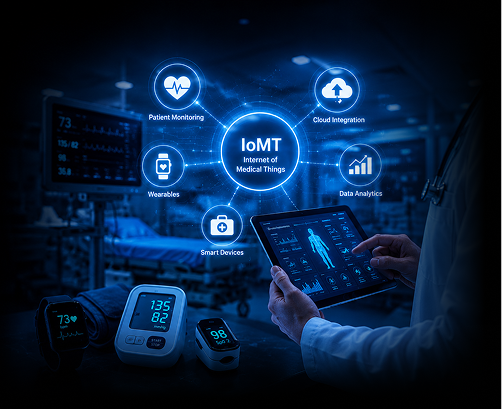
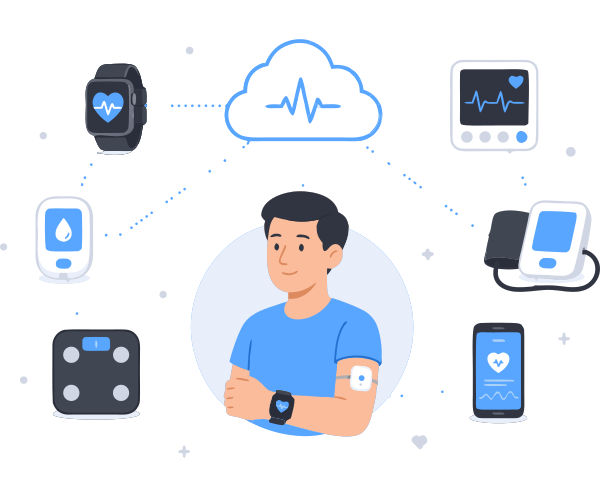
Smartwatches, fitness trackers, and other wearable devices allow individuals to monitor their vital signs and health data in real-time. This information can be shared with doctors to help them make more informed medical decisions. Additionally, these devices can provide reminders for medication or even alert caregivers if something changes with a patient's health status.

Patient Monitoring Systems
These systems use sensors and network connections to monitor patient vital signs in hospitals and care facilities. These systems can help nurses and doctors stay on top of changes in a patient's health status, allowing them to intervene more quickly if issues arise.

Remote Monitoring
IoT-enabled devices allow for remote monitoring of patients who cannot get to the hospital regularly due to geographic location or physical limitations. This remote monitoring allows healthcare professionals to keep track of their progress from afar, saving time and money.

Smart Beds
Smart beds use sensors that can detect movement and adjust based on a patient's body weight and position. Smart beds mean better comfort for patients in the hospital and more accurate data for doctors and nurses.

AI Assistants
IoT-enabled devices like Amazon Alexa, Apple's Siri, and Google Home can provide useful information to patients about their health conditions or medications. Additionally, these AI assistants can control home medical equipment, allowing users to monitor their health from the comfort of their homes.