
Skip to main content Scroll Top

Every Tech Buzzword Dies the Same Way. AI Is Next

left_bg_new
right_bg_new
Every Tech Buzzword Dies the Same Way. AI Is Next
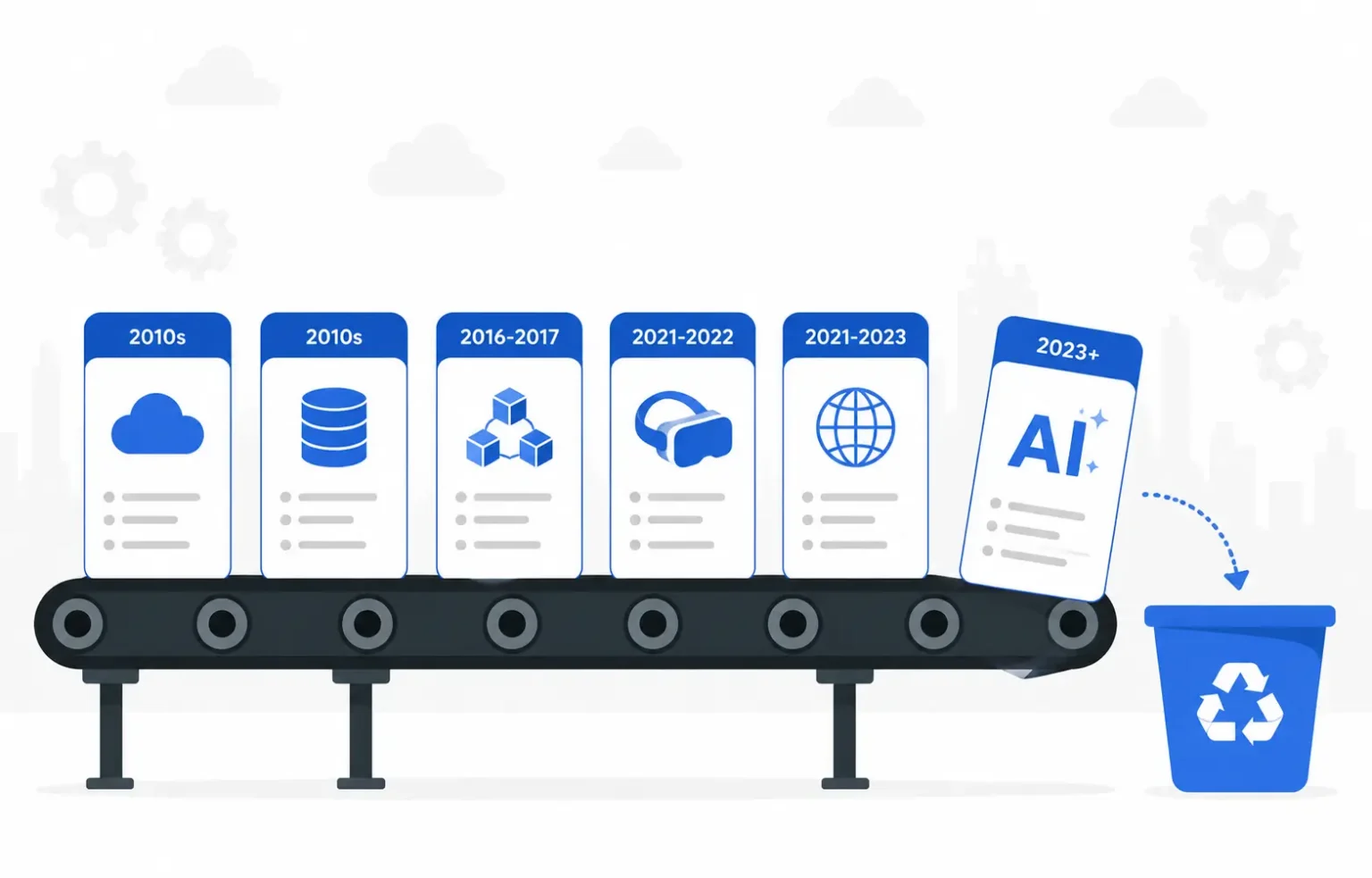
Every tech buzzword follows the same life cycle. It shows up as a real feature, turns into a checkbox everyone needs, and then quietly disappears - not because the technology failed, but because it won so completely that saying it out loud stopped making sense.
Back then, we were all talking about “the cloud” right?
If you weren’t offering a “cloud-enabled” service back in the 2010s, you were definitely feeling left behind. So many startups started to slap this tagline on every product - app, CRM, landing page, etc. - regardless of whether the product even really used the cloud.
Ten years later, nobody says "cloud-enabled" anymore. That's not because the cloud failed - it's the opposite. It won so completely that the phrase became pointless. Of course, your app runs on the cloud. What else would it run on?
"AI-powered" is walking the exact same path, just faster. Once you see why "cloud-enabled" disappeared, you can predict almost exactly how "AI-powered" will disappear too.
vector_Image_every_tech_buzzword_dies_the_next

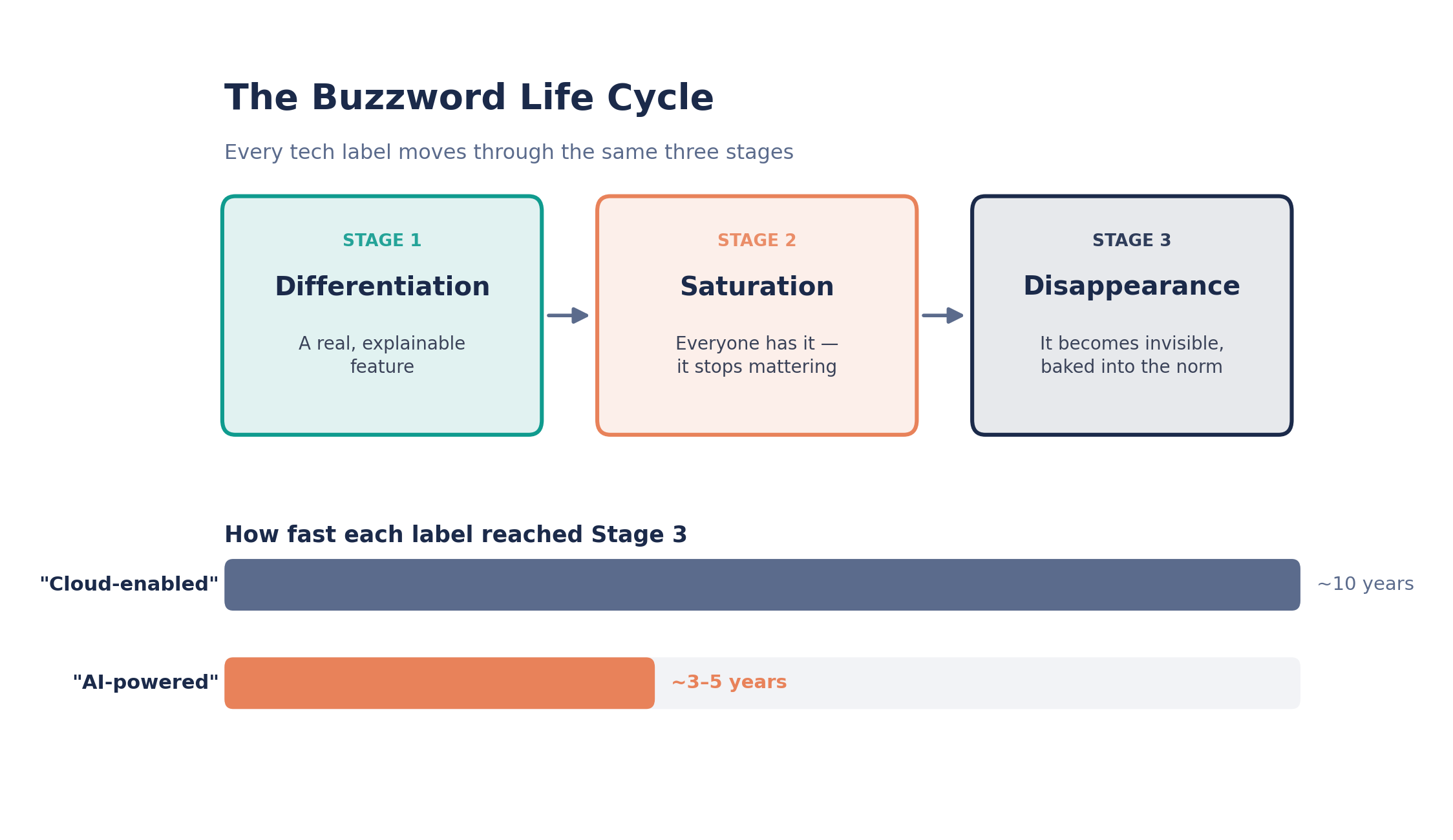
Three Stages Every Buzzword Goes Through
Stage 1
It is true.
"Cloud-enabled" was initially defined as: nothing locally, we can scale as needed, and access from everywhere. We had to educate the customer on that.
Today, "AI-enabled" serves exactly the same function: let's let the user know we're using some model, not a static decision tree, to achieve this function.
Many buyers will still hear this as something new that is value-added.
Stage 2
everybody else is doing it, so it's no longer interesting.
By the mid-2010s, "cloud-enabled" was a neutral feature - one you didn't even need to mention - unless you didn't have it (which made you look archaic). Even if you had it, you didn't get points.
AI is well into this phase already. If you look at most app store categories, AI is mentioned by nearly everyone. It no longer conveys useful information to the buyer.
Stage 3
It's gone.
You do not mention "cloud-enabled" on the home page of your product anymore - not that it stopped being true, just that it sounds dated if you mention it now.
The underlying technology didn't go away; it just got built into everything, so people expect it. AI is likely to go here very rapidly because it's going to be very cheap and simple to add an AI feature to an existing product (e.g., using another company's AI as a library). The cloud took roughly ten years to transition from exciting to not interesting.
AI is going to do the same in about three to five years.

Why AI Fades Even Faster Than Cloud Did
There's a real reason "AI-powered" empties out faster than "cloud-enabled" ever did, and it's worth understanding.
Cloud Era
"Cloud-enabled" described where something ran
That was easy to check - your servers were either in your own building or they weren't.
AI Era
"AI-powered" describes how something works on the inside
That's invisible to the user. Often, it doesn't even describe anything different. A basic feature that suggests what to watch next, a simple chat box, and a genuinely sophisticated system can all wear the exact same label.
Once a word can mean almost anything, it stops meaning anything. Smart buyers now hear "AI-powered" and think: translation — they called someone else's AI tool and didn't build much else. People are already asking the obvious follow-up question out loud: Powered how? Doing what? Better than the alternative, by how much?

This Isn't a Future Prediction - It's Already Happening

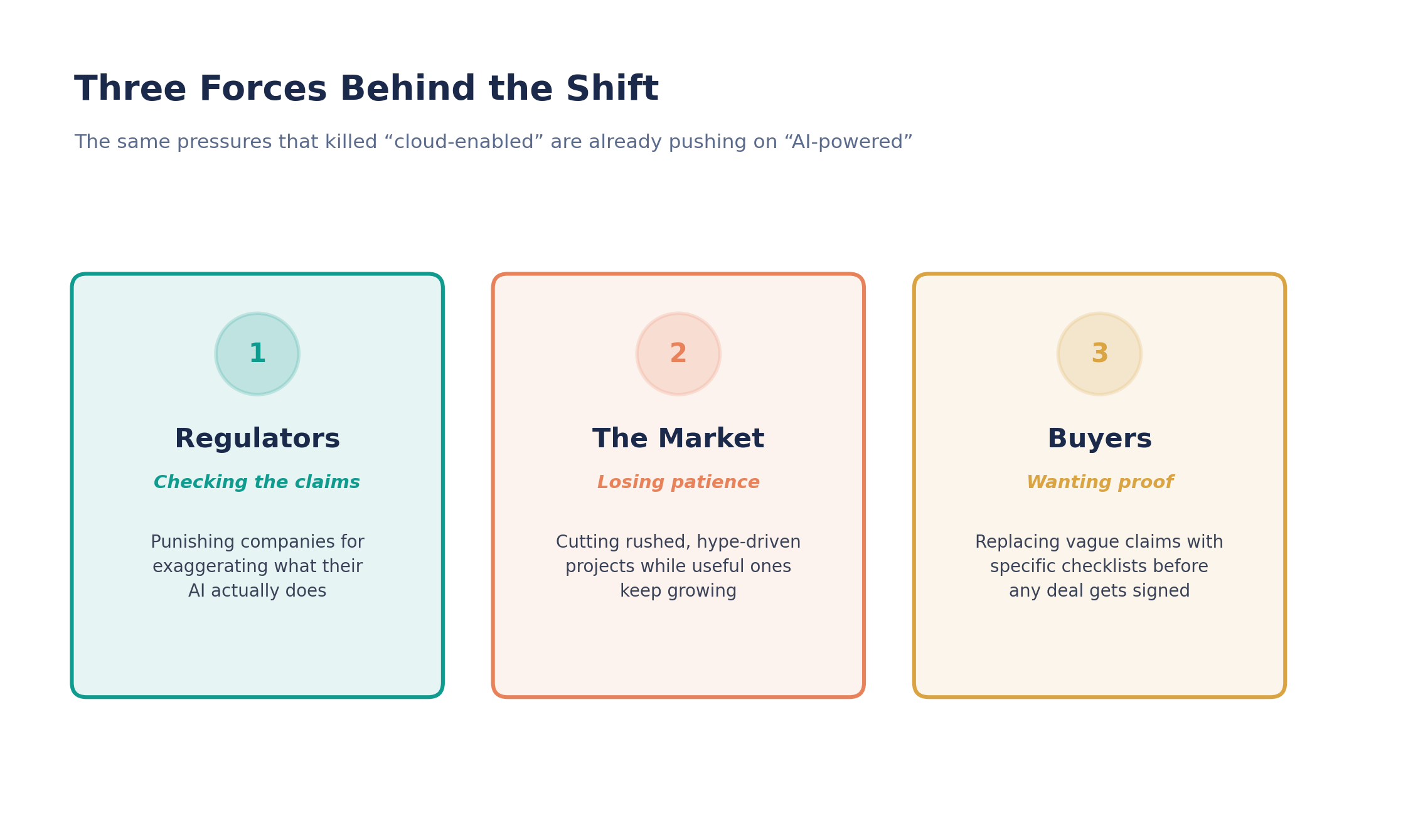
Three groups are pushing this shift at once: regulators, the market, and buyers themselves. It's the same pattern that killed "cloud-enabled."
1. Regulators are going after the marketing

US regulators have begun fining companies for claiming to use AI when they actually are not. One company announced that its voice ordering system eliminated the need for humans, while investigators found that most of the orders needed to be handed off to someone. Another was fined for advertising its “AI shopping assistant” when contract workers overseas did much of the labor.

These aren’t just minor warnings. They are being pursued like financial fraud. “AI-powered” now is not a statement of aspiration but a legally defendable factual assertion, the breach of which can lead to lawsuits.

2. The market is getting boring

Gartner has been following the hype cycle of emerging technologies since the 90s, and according to them, AI is currently entering the phase they refer to as the ‘valley of disappointment’. That’s the stage where enthusiasm plummets after the initial buzz wears off and people begin questioning the hype.

The question then becomes: “Did any of that even actually help us?” US companies are spending about $2 million on AI projects in 2024, and less than 3 out of 10 AI executives say they are even satisfying their superiors, while not that many believe the future of AI technology will make any impact on their jobs in the future. None of this suggests AI is a complete failure; it indicates that hyped up, low-value, premature, first-adopter projects are likely to get killed while the genuinely useful ones will endure, much like the cloud did just a decade earlier.

3. Buyers want evidence, not advertising jargon

Large corporations now ask specific, detailed questions from their software vendors when discussing potential cloud infrastructure. Such questions would revolve around: which AI models is your firm using? What are their data safety parameters? Do your vendors’ solutions comply with existing privacy legislation?

That's essentially what happened years ago in cloud security: a blanket statement evolved into a checklist, and now that checklist determines whether a sale will actually be closed or not
What Replaces the Empty Label

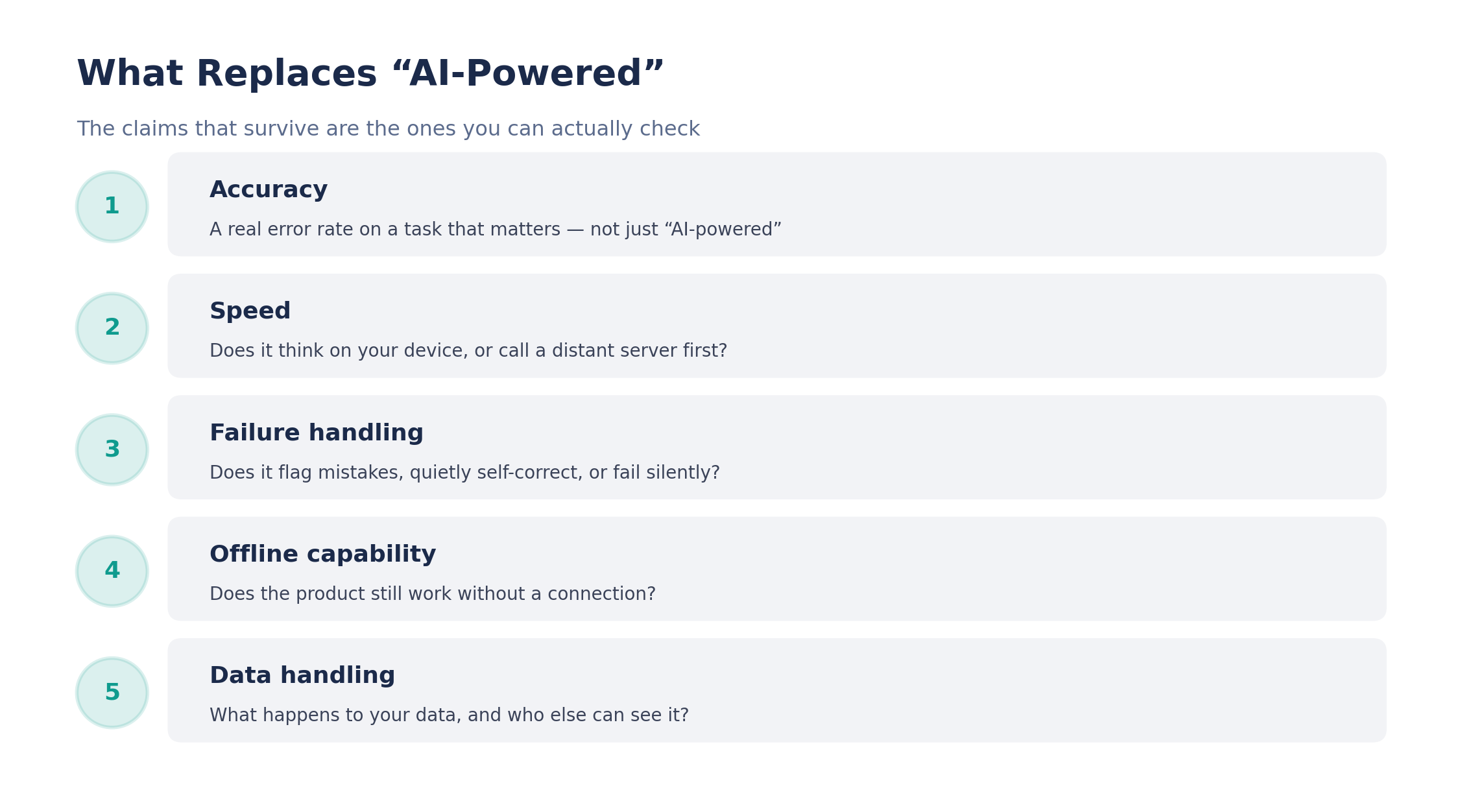
As soon as the “cloud-enabled” trend faded away, it didn’t go anywhere - it shattered into more specific promises like a certain % of uptime, regional failover, or compliance checklists. Vague gave way to precision. The exact same will probably happen with AI marketing, and the claims that actually stick will be those you can verify:
All of those work just fine without mentioning the term AI.

It's an Engineering Problem, Not Just a Marketing One
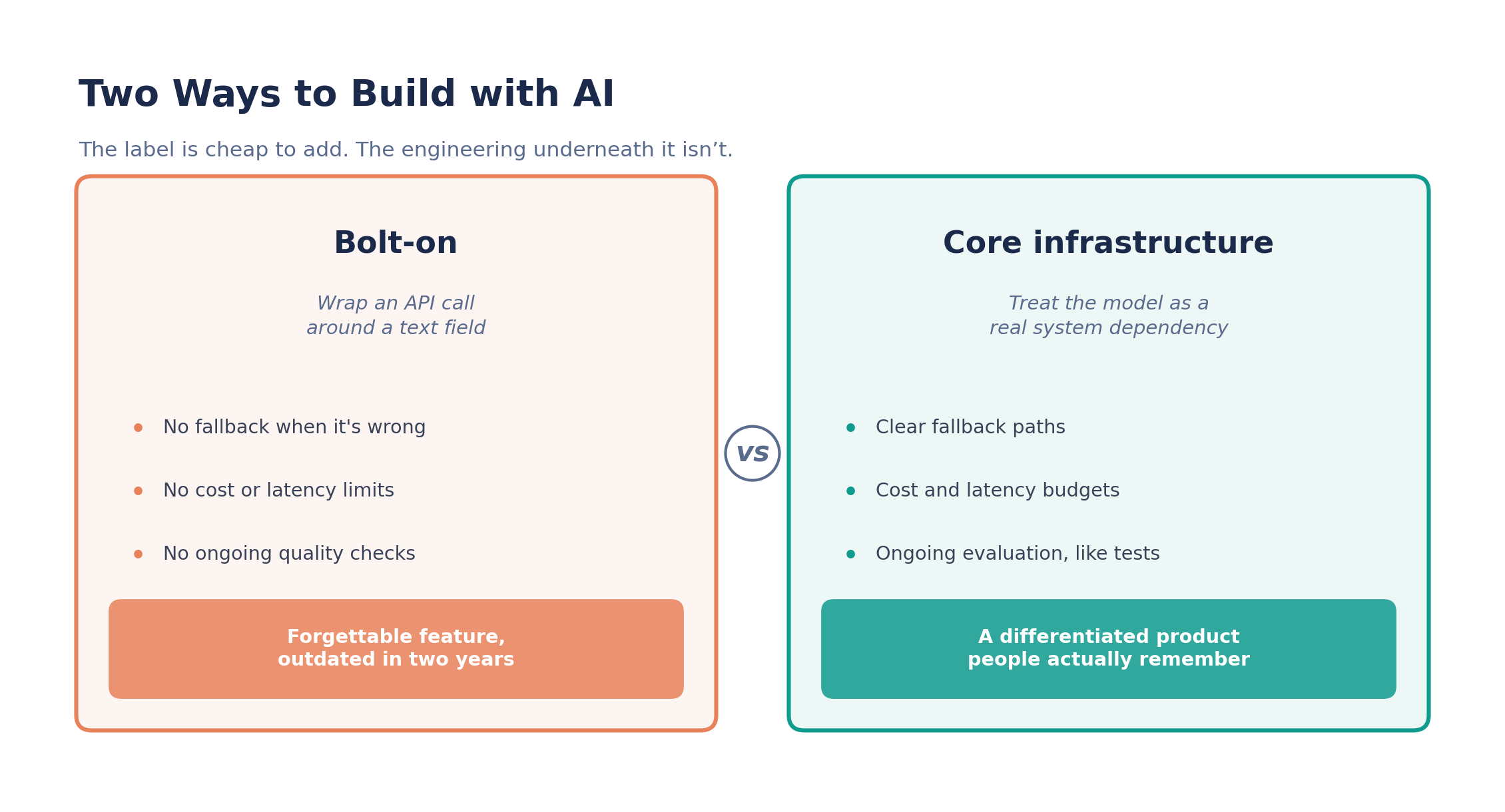
It's tempting to treat this as just a wording issue, but the same thing happened with the cloud, and it's happening again with AI.
When "cloud-enabled" was just a marketing checkbox, plenty of products bolted on a basic backup feature without rethinking anything else — and it showed. The ones that lasted were built around the cloud from day one. Slapping on the label was cheap. Building it properly wasn't.
Starbucks just proved the same point. In May 2026, they quietly killed an AI tool that scanned store shelves to count milk and syrup automatically - no more manual counting, in theory. Nine months later, it was gone. The AI kept confusing milk types and missing bottles sitting right there in plain sight. Employees stopped trusting it and counted everything by hand anyway, which meant more work, not less.
That's the whole pattern in one story. "AI-powered" was enough to get the project approved and rolled out to thousands of stores. Nobody checked how accurate it actually needed to be before it went live - the baristas found out the hard way, one wrong count at a time.
Wrapping a chatbot around a text field and calling it "AI-powered" takes an afternoon. Making AI a trusted part of a product is a different job - it means a backup plan for when it's wrong, real cost control, and constantly checking it hasn't quietly gotten worse.
Teams that treat AI as a quick add-on will ship forgettable features. Teams that treat it as core infrastructure will build the products people actually remember.

The Takeaway

AI isn't just not-a-lie; like the cloud before it, the technology isn't going away. But the word itself is devaluing itself quickly as it grows cheaper to just smear some AI over the top. Before long, being "AI-powered" won't provide any value whatsoever.
What you will care about is what's under the hood. That's exactly what mattered after the "cloud-enabled" fad had run its course - how fast, how accurate, how it handles errors, how it respects your privacy. Any vendor selling an "AI-powered" product that can't answer those questions should be treated the same way as a vendor selling a "cloud-enabled" one: the statement is likely true, but utterly meaningless.
In three years, you won't even hear the top products using the words "AI-powered."
So the next time you see that label on something you're about to buy, use, or build - don't ask if it's AI-powered. Ask what it actually does, and what happens when it doesn't.
Share Article
Share Article